Stop Watching The Wrong AI Race
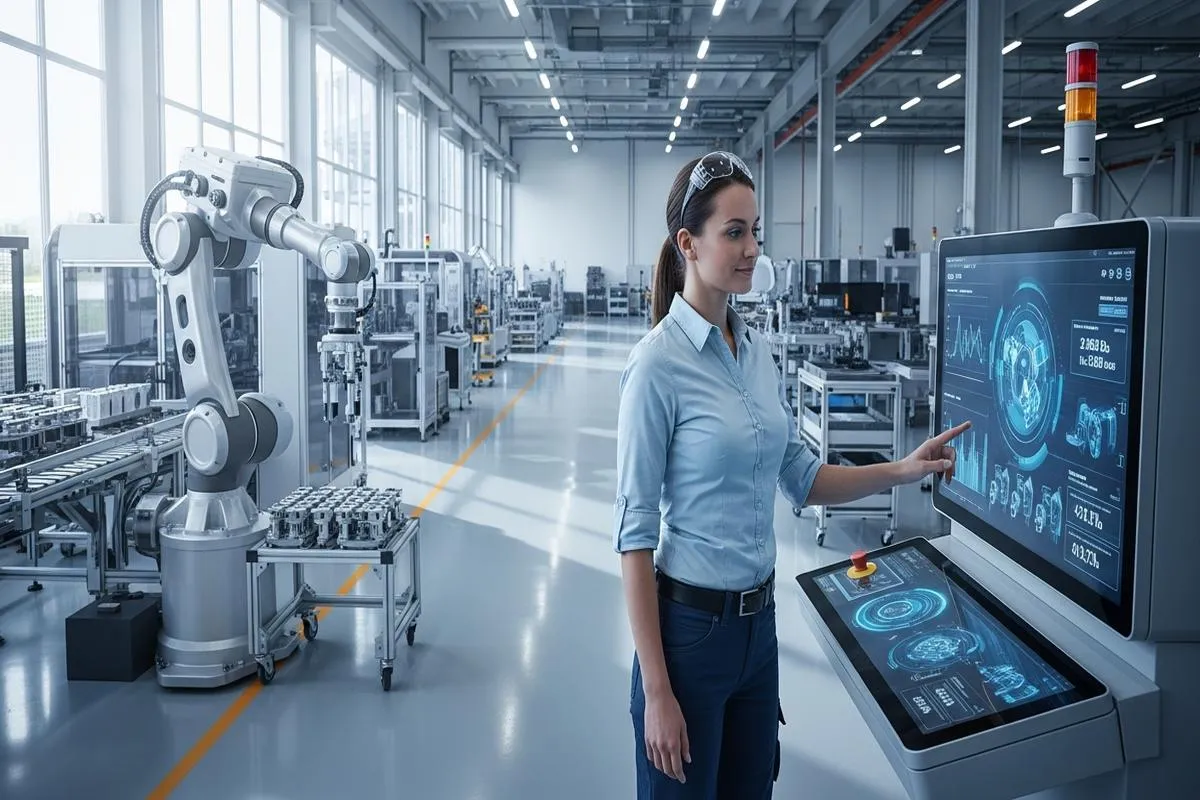
The business press and venture capital narrative is fixated on a single, simplistic contest: a Cold War-style AI race between the United States and China. Who is building the largest foundation model? Who is fabricating the most advanced semiconductors? This is a compelling story, but it is also a profound misdirection. It mistakes the opening act for the entire play.
The invention of a general-purpose technology is never the source of its economic value. The value is unlocked during its diffusion—the slow, difficult, and unglamorous process of embedding that technology into every existing industry. The development of foundational AI models is a spectacle. The application of that AI is where fortunes and competitive advantages will actually be forged.
The Commoditization of Invention
At the frontier of AI development, we see a high-stakes game of massive capital expenditure. Training a next-generation large language model requires billions in compute resources, specialized talent, and proprietary data. This naturally leads to a market dominated by a handful of players with the balance sheets to compete—Microsoft/OpenAI, Google, Amazon, and their state-backed equivalents in China.
This looks like a race to build an unassailable moat. It is not. It is a race to build a utility.
Like electricity grids, cloud computing infrastructure, or shipping lanes, foundational AI is becoming a standardized input. Its power is astonishing, but its strategic value to the end user lies in its accessibility and reliability, not in its novelty. As these models become available via APIs at decreasing costs, owning the “best” model provides a temporary marketing advantage, not a durable business model. The core product—generative intelligence—is becoming a commodity.
The real competition is not between the utility providers. It is between the businesses that use that utility.
Diffusion Creates Durable Value
History provides a clear blueprint. The economic revolution of electricity was not driven by the utility companies that built the power plants. It was driven by the factory owners who ripped out their steam engines and redesigned their entire production lines around the new power source. They leveraged electricity to create multi-story factories, optimize workflows, and unlock unprecedented levels of productivity. The electricity was an input; the redesigned factory was the competitive advantage.
The same holds true for the internet. The architects of TCP/IP did not capture the lion’s share of the value. The value was captured by companies like Amazon, who used the internet’s connectivity to re-engineer retail, and by countless SaaS companies who used it to transform software delivery from a product into a service.
AI follows the same logic. The economic impact will not be measured by the parameter count of a model, but by the percentage points of efficiency gained in a supply chain, the reduction in fraudulent transactions for a bank, or the acceleration of drug discovery for a pharmaceutical company. These are the metrics that translate directly to operating margin and market share.
A logistics firm that uses AI to optimize routing and load balancing might cut its fuel costs by 15%. A CPG company that uses AI to forecast demand more accurately can reduce inventory holding costs by 30%. These are not speculative, futuristic promises; they are tangible, operational improvements that drop directly to the bottom line. The company that achieves this has a structural cost advantage over its rivals, regardless of who invented the underlying algorithm.
The Real Competitors are Next Door
Once you accept that foundational AI is a utility, the competitive landscape shifts. The race is no longer a geopolitical duel between Silicon Valley and Shenzhen. It is a brutal, industry-by-industry contest between incumbents and challengers.
It is the German automotive manufacturer versus its Japanese and Korean rivals. Who can integrate AI most effectively into their design, manufacturing, and predictive maintenance processes to produce better cars at a lower cost? The winner will not be the one with a proprietary model, but the one with the superior integration strategy.
It is the established insurance firm versus the agile insurtech startup. Both have access to the same powerful AI models for claims processing and risk analysis via an API. The winner will be the organization that successfully re-engineers its internal workflows, retrains its workforce, and uses the technology to create a fundamentally more efficient and accurate underwriting process.
The critical insight here is that access to the technology is becoming table stakes. The differentiator is the ability to execute on its implementation.
The Barriers Are Organizational, Not Technical
The primary obstacles to AI diffusion are no longer technological limitations. They are the far more stubborn challenges of business process, data infrastructure, and human capital.
-
Data Discipline: AI models are useless without clean, structured, and accessible data. The vast majority of enterprises are sitting on decades of messy, siloed data. The unsexy, expensive, and politically fraught work of data governance and infrastructure modernization is the non-negotiable prerequisite for any serious AI initiative. This is where most projects fail before they even begin.
-
Talent Mismatch: The demand is not just for AI researchers. The critical shortage is in “translation” roles: product managers, engineers, and strategists who understand both the business problem and the capabilities of the technology. These are the people who can identify a high-value use case and manage the complex process of integrating an AI solution into an existing operational workflow.
-
Organizational Inertia: Technology is easy; changing how people work is hard. A successful AI implementation is not about adding a new software tool. It is about fundamentally redesigning business processes that may have been in place for decades. This requires executive sponsorship, a willingness to cannibalize existing revenue streams, and the political will to overcome internal resistance.
This is the real work. It is slow, difficult, and lacks the glamor of a product launch keynote. It is also the only path to creating real, sustainable value.
So, by all means, watch the headlines about the latest model release. But understand that you are watching the preamble. The main event is happening inside the operational guts of boring, established industries. The winners of the AI race will not be the inventors of the engine, but the operators who build the most efficient economic machine around it.