AI is a Geopolitical Tollbooth
The market is obsessed with the wrong question. Analysts and pundits debate whether the AI boom is a bubble, staring at stock tickers as if they hold some mystical truth. This is a trivial distraction.
The only question that matters is this: What global economic structure must emerge to justify these valuations? The answer is not about better software. It’s about the creation of a new form of global infrastructure and the power that comes with owning it.
The End of Manufacturing Dominance
The 20th century was defined by tangible assets. A nation’s power was measured by its manufacturing output, the global reach of its military, and the dominance of its currency. The United States excelled at all three. Its factories armed the world, its fleets patrolled the oceans, and the dollar became the default medium for global trade. Power was built on steel, oil, and logistics.
That era is over. While traditional industry and military might still matter, the primary source of geopolitical leverage is shifting. It is moving from the tangible to the intangible, from physical supply chains to digital ones. The new indispensable asset is not the factory; it is the foundation model and the compute infrastructure that runs it.
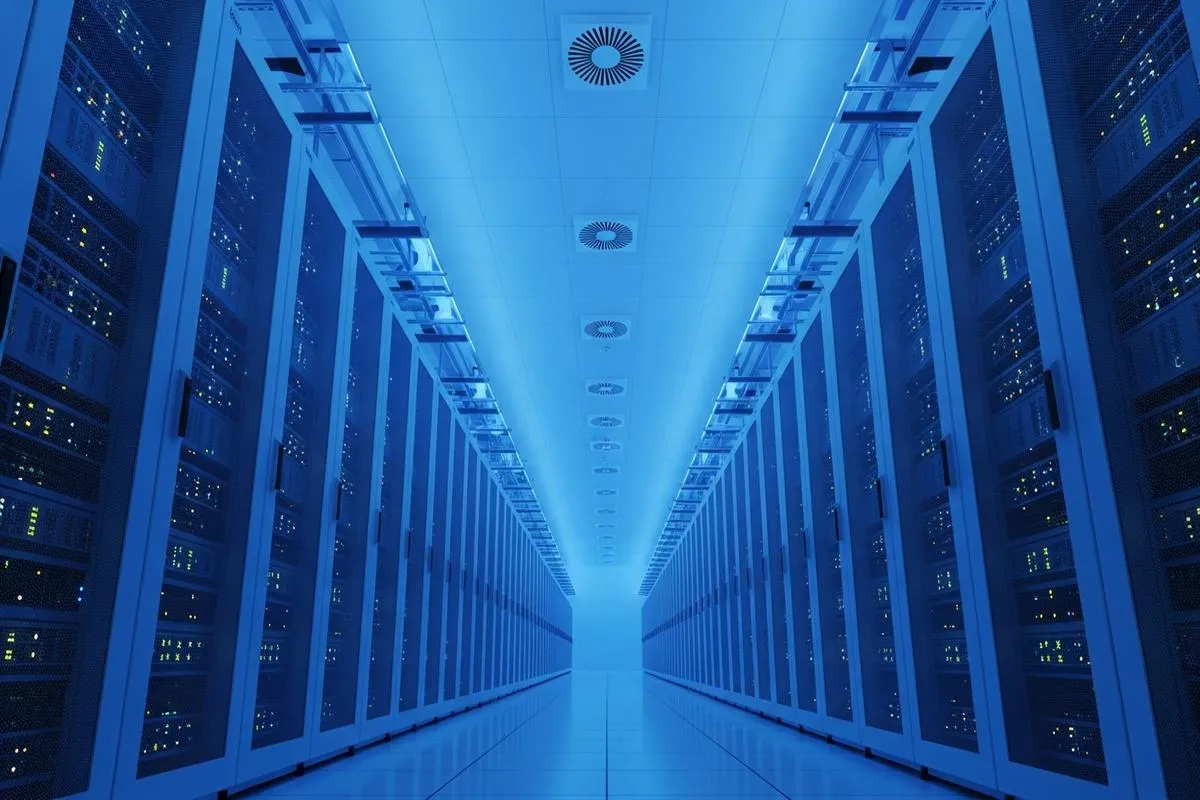
Ownership of this AI infrastructure is the 21st-century equivalent of controlling the world’s shipping lanes or reserve currency. It is a choke point on global economic activity, and the market valuations reflect a rational bet on the owners’ ability to extract value from that control.
A Global Tollbooth
Think of the current AI leaders—NVIDIA, Microsoft, Google, OpenAI—not as tech companies but as infrastructure operators. They are not merely selling products; they are building the digital roads, bridges, and power grids upon which all future economic growth will depend. Every industry, from healthcare to finance to logistics, will be rebuilt on top of their platforms.
This creates a classic tollbooth model on a global scale. To participate in the modern economy, other nations will have little choice but to pay for access. This is not a competitive market where a French or Japanese company can simply build a viable alternative overnight. The combination of data moats, specialized talent, and staggering capital requirements for training next-generation models creates an almost insurmountable barrier to entry.
We are witnessing the creation of a global oligopoly for intelligence itself. The rest of the world is being positioned as a customer base, not as a peer. Their national champions can build applications—the cars that drive on the new roads—but they will not own the road itself. They will pay a toll for every transaction, every insight, and every productivity gain derived from the core infrastructure.
The Price of Access
The central challenge for the world will not be catching up, but figuring out how to pay the bill. The cost of admission to the AI-powered future will be a perpetual tax on national economies, flowing from Europe, Asia, and South America directly to a handful of corporate balance sheets in the United States.
This isn’t just a license fee. It’s a new form of dependency. It represents a direct claim on the future GDP of other nations. The “compute-dollar” will become as critical as the petrodollar, but with a key difference: oil can be sourced from multiple countries. Foundational AI models, for the foreseeable future, cannot.
This has profound implications for national sovereignty. A nation that cannot control its own core intelligence infrastructure is not fully sovereign. It is a vassal state, reliant on a foreign power for the basic engine of its economy. Strategic decisions, industrial policy, and even military readiness will become dependent on the continued and uninterrupted access granted by a foreign corporation. The terms of this access will become a primary tool of foreign policy and economic statecraft.
Valuations Reflect Power Not Products
This brings us back to the market valuations. Are they a bubble? Only if you believe this future will not come to pass.
If you view these companies as software vendors, their valuations seem absurd. But if you view them as the owners of the world’s next essential infrastructure, the numbers begin to make a terrifying kind of sense. The market is not pricing in the revenue from selling a chatbot. It is pricing in the future rent extracted from entire continents.
NVIDIA is not a chip company; it is the sole provider of the picks and shovels for a global gold rush where it also owns a stake in the mines. Microsoft is not a software company; it is the integrated landlord for the new global economy. The stock prices reflect a bet that these entities will successfully privatize a global utility—intelligence itself—and charge monopoly prices for it.
This isn’t about technology. It’s about power. The debate over AI should be focused on the mechanics of this new global settlement. The questions are not about machine consciousness but about economic control. Who owns the infrastructure? Who sets the price of access? And who will be left paying the toll? Everything else is noise.