Speeding Construction Creates Dead Capital
Opening
The obvious story in the AI data-center boom is that construction has gone vertical because investors expect artificial intelligence to consume almost unlimited computing capacity. That story is incomplete. The more important mechanism is uglier: the industry is getting better at finishing data-center buildings faster than it can secure usable electricity.
That is not a minor scheduling problem. It changes the economics of the entire investment cycle.
A finished data center without a firm power connection is not productive infrastructure. It is expensive dead capital with a cooling system. It still carries depreciation, financing costs, security expenses, property taxes, maintenance obligations, vendor commitments, and the political risk attached to a giant facility that visibly consumes land while delivering no local benefit.
The rush to use modular electrical rooms, robotic drilling, custom concrete, preassembled mechanical systems, and faster optical connectors looks like operational progress. In narrow construction terms, it is. But when grid interconnection is the real bottleneck, shaving months from building delivery can make the capital problem worse rather than better. The building arrives sooner. Revenue does not.
That is the overlooked economic fault line inside the AI infrastructure boom. The winners will not necessarily be the companies that build data centers fastest. They will be the ones that control credible power timelines, can tolerate stranded-capital periods, and refuse to confuse construction velocity with commercial readiness.
The Overlooked Angle
The narrow issue is the growing mismatch between data-center construction speed and grid-interconnection speed.
A conventional data-center project had many constraints, but they generally moved in a recognizable sequence: secure land, obtain permits, build the facility, install equipment, connect to power, commission the systems, and begin serving customers. The AI buildout has scrambled that sequence because the prize for early capacity is perceived to be enormous. Developers now try to compress every controllable phase at once.
They can speed up concrete. They can fabricate electrical and mechanical rooms off-site. They can automate repetitive floor work. They can pre-order equipment. They can use modular designs. They can even buy or repurpose on-site generation equipment when utility capacity is unavailable.
What they cannot manufacture on demand is a robust grid connection.
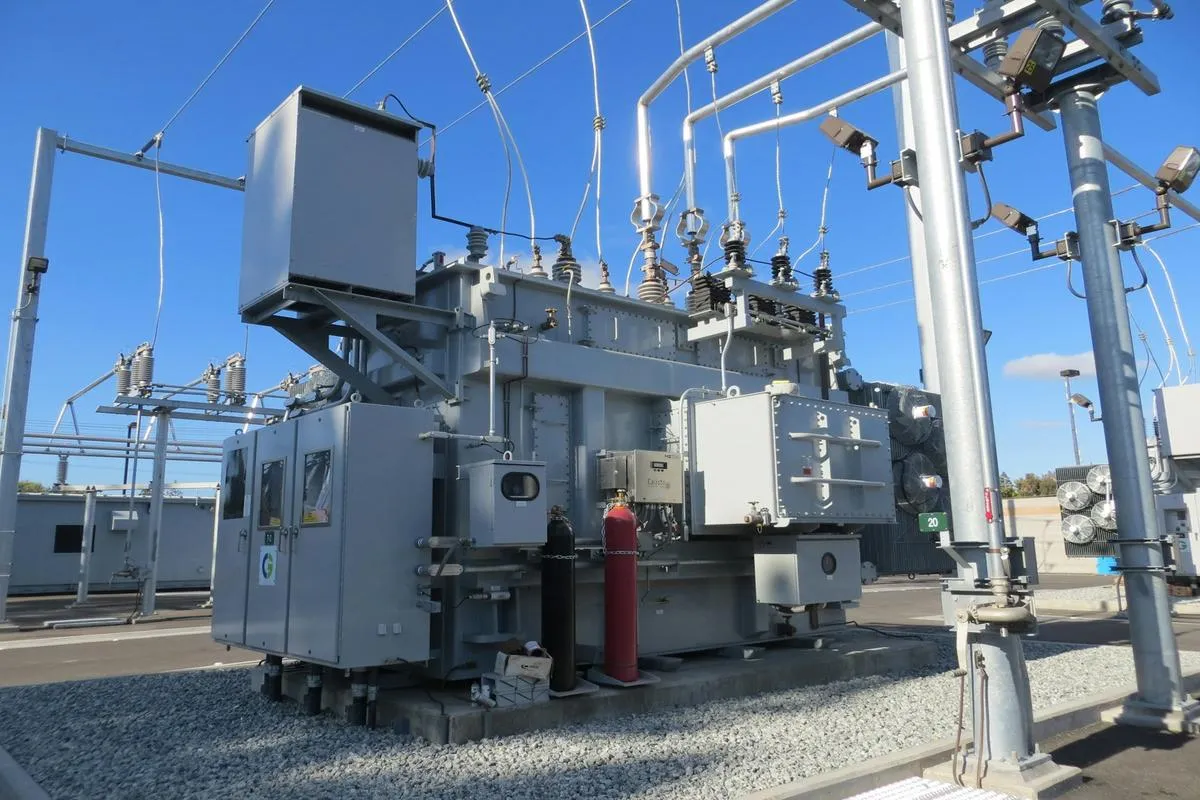
A multi-gigawatt data-center campus does not merely need a line running to the property. It needs generation capacity somewhere in the system, high-voltage transmission capacity to move that power, substations to step voltage down, distribution equipment, protection systems, engineering studies, regulatory approvals, and a utility willing to commit to a delivery schedule. In many markets, every one of those elements is already contested.
This creates a peculiar and dangerous outcome: physical completion becomes decoupled from economic completion.
A developer may celebrate that it cut six months from construction. Yet if interconnection, substation delivery, or transmission upgrades remain delayed, those six months do not produce earlier revenue. They produce six additional months in which capital is tied up without earning its expected return.
That is the real long-tail risk. Faster building does not automatically mean faster monetization. In a grid-constrained market, it can mean a longer period of carrying a finished but underutilized asset.
Why This Small Detail Matters
In ordinary commercial real estate, an empty building is a problem, but the capital structure is relatively legible. A warehouse can often be leased to another tenant. An office building can be subdivided. A retail site can be repurposed, however painfully. The asset has alternative uses.
An AI data center is different. Its value is tightly linked to a specific combination of power density, cooling design, network connectivity, specialized hardware, and customer demand for compute. The building shell is not the product. Reliable energized capacity is the product.
That distinction matters because the expensive components of a modern AI facility are not easily redirected.
Consider the sequence of capital commitments:
- Land is acquired or optioned near transmission infrastructure.
- Building construction begins.
- Electrical and cooling systems are ordered long before revenue starts.
- High-value servers, networking gear, and memory systems may be purchased or reserved.
- Specialized labor is contracted in a tight market.
- Power arrangements are negotiated with utilities, generators, fuel suppliers, or transmission owners.
- Customers may expect delivery dates based on aggressive project schedules.
Every step increases exposure before the facility produces cash flow.
Now introduce an interconnection delay. The delay does not pause all costs. Debt interest continues. Equipment warranties start running. Skilled contractors move to their next project. Construction claims accumulate. Hardware can become less competitive before it is fully deployed. Customers may redirect workloads to a rival that has actual powered capacity rather than a press release and a concrete structure.
This is why the grid is not just an external inconvenience. It is the timing mechanism for return on invested capital.
If a project costs more because materials, electrical gear, and labor are scarce, its required revenue base rises. If it then starts earning later because power is delayed, the economics deteriorate twice: the denominator gets bigger and the cash flows arrive later. This is not subtle finance. It is basic arithmetic, which is precisely why the market is so eager to ignore it during a boom.
The danger is greatest where developers treat a utility indication of interest as equivalent to a firm energization commitment. They are not the same thing. A utility can recognize demand, study demand, plan around demand, and publicly discuss demand without having the equipment, approvals, generation resources, or transmission headroom to serve it on the timetable embedded in a developer’s financial model.
The Economic Mechanism
The core mechanism is a mismatch between accelerating construction duration and sticky power-infrastructure duration.
Construction techniques reduce the time required to create the physical shell and internal systems. Grid upgrades do not compress so easily because they rely on long-lead equipment, regulated planning processes, land rights, public approvals, coordinated engineering, and system-wide reliability requirements.
A data-center project therefore has two clocks:
| Project clock | What determines it | Can it be compressed easily? |
|---|---|---|
| Facility completion | Construction labor, modular design, equipment installation, site execution | Often yes |
| Commercial energization | Grid studies, transmission upgrades, transformer supply, utility approvals, generation availability | Usually no |
The investment thesis works only when those clocks finish close together.
If the facility clock runs ahead of the power clock, the developer creates an asset that is technically complete but commercially incomplete. The resulting cost is not merely the cost of waiting. It is the cost of waiting after the company has already committed most of the capital.
The carrying-cost trap
Suppose a developer originally expects to spend progressively over a long construction period, then begin revenue generation shortly after completion. Faster construction changes the spending pattern. More capital is deployed earlier. That would be attractive if revenue also began earlier.
But if the grid timetable does not move, faster construction front-loads cash outflows while leaving cash inflows fixed.
The consequence is a larger financing gap.
For a company using corporate cash, this means less flexibility for other investments, buybacks, acquisitions, or working-capital needs. For a company using debt, it means interest expense accumulates before the asset can contribute operating income. For a company relying on equity markets, it creates pressure to keep raising money into a cycle where investors may eventually ask the rude but necessary question: when does this capacity earn a return?
The phrase “time to market” is often used as if all time is equally valuable. It is not. Bringing a building to market without power is not time to market. It is time to a more expensive waiting room.
The false comfort of on-site generation
On-site gas turbines, diesel systems, and repurposed jet engines appear to solve the problem. They can solve part of it, particularly for temporary bridging power, limited operations, or remote locations. But they introduce a new cost stack.
The developer must obtain equipment in a supply-constrained market, secure fuel logistics, manage emissions rules, build maintenance capability, deal with noise and local opposition, and accept fuel-price exposure. The system may also operate at a cost structure far above grid power. That matters because AI computing is already capital intensive. Expensive electricity turns a high-revenue infrastructure product into a gross-margin problem.
There is also a scale issue. A backup generator is not a substitute for utility-scale, continuously supplied energy. A campus designed for enormous compute loads cannot casually bridge a large, permanent grid deficit with scattered generator sets. The equipment, fuel flow, air permits, and maintenance burden become industrial operations in their own right.
On-site generation can be valuable. But it is not free optionality. It is a costly way to buy time, and time is only useful if a credible grid solution eventually arrives.
Why shortages compound the problem
The boom is pulling on the same constrained supply chains from several directions. Electrical contractors, transformers, switchgear, turbines, semiconductor components, steel, concrete, cooling equipment, and high-voltage engineering talent are all subject to demand pressure.
This means the interconnection delay is not isolated from construction inflation. It feeds it.
When a project must wait, vendors may reprice. Labor contracts may need extension. Equipment orders may require changes. Financing terms may worsen. A delayed project can find itself competing for scarce materials twice: first during initial construction, then again when additional grid or on-site power work becomes necessary.
The industry likes to frame capacity as a quantity problem: how many megawatts, how many racks, how many chips. But constrained infrastructure markets are timing markets. A megawatt available three years after customer demand arrives is not equivalent to a megawatt available now. The later megawatt may have lower economic value because competitors have already captured the workload, hardware has advanced, or AI pricing has compressed.
The Strategic Consequence
This mismatch creates a clear hierarchy of advantage.
The strongest position belongs to operators with existing energized capacity, contractual rights to expansion capacity, established utility relationships, and sites located near infrastructure that can actually be upgraded. They possess something more valuable than a construction plan: a defensible path to usable power.
The next-best position belongs to developers with enough balance-sheet strength to carry assets through delays and enough commercial discipline to phase projects around firm power milestones. They may build aggressively, but they do not pretend that a nonbinding utility timeline is revenue.
The weak position belongs to everyone selling future capacity based on the assumption that power will appear because demand is loud enough. Demand does not create substations. It does not manufacture transformers. It does not override local water concerns, transmission objections, or utility reliability obligations.
This is likely to produce several strategic outcomes.
Existing power becomes a distribution moat
In software markets, distribution can be more valuable than product quality. In AI infrastructure, energized power is distribution. It determines who can deliver compute when customers need it.
A provider with ready capacity can sign customers while a rival is still explaining its interconnection queue. Once workloads are integrated, data is moved, operating processes are established, and commercial contracts are signed, switching is not frictionless. The first provider with power may secure a durable customer relationship even if a rival later offers a newer building.
The moat is not the server rack. Competitors can buy racks. The moat is the right to turn those racks on.
Smaller developers face a financing asymmetry
Large technology companies can absorb delays more easily because they have cash flows from other businesses, procurement power, and the ability to negotiate directly with equipment suppliers and utilities. Smaller developers do not have that luxury.
They often need a clean chain of assumptions to satisfy lenders and equity investors: construction cost, tenant commitments, power availability, equipment delivery, and operating margins. If power timing becomes uncertain, the entire financing package weakens.
Lenders do not love assets whose primary revenue prerequisite is controlled by a regulated third party facing equipment shortages and political pressure. They will demand more equity, tighter covenants, higher pricing, stronger customer contracts, or all four. That raises the developer’s cost of capital precisely when construction inflation is already eroding the project’s return.
The result is consolidation pressure. Not because large companies are inherently better builders, but because they can survive the period between physical completion and commercial energization.
Utilities gain leverage but inherit risk
Utilities are often described as the beneficiaries of large new loads. That is true only up to a point. New demand can support investment, but it also forces utilities to make long-lived infrastructure decisions around customers whose demand forecasts may be tied to a volatile AI investment cycle.
If utilities overbuild for speculative projects that later slow down, ratepayers and regulators will ask who approved the spending. If they underbuild, they will be accused of blocking economic development. Either way, the utility becomes the bottleneck everyone resents.
That political pressure encourages caution, not speed. And caution lengthens the power clock further.
What Most Commentary Gets Wrong
Most commentary treats rapid data-center construction as evidence that supply will quickly catch up with AI demand. This confuses visible activity with usable capacity.
Cranes, concrete pours, and ribbon-cutting announcements are easy to see. Interconnection studies, transformer lead times, substation engineering, fuel permits, and transmission upgrades are boring. Boring things decide whether capital earns money.
The second lazy interpretation is that technology will simply remove every bottleneck. Modular construction can reduce site work. Faster cable connectors can reduce installation time. Software can optimize cooling and load management. None of that creates new transmission corridors or resolves a local community’s resistance to power-hungry industrial facilities.
Technology can compress tasks inside the fence. The binding constraints increasingly sit outside the fence.
The third mistake is to view on-site generation as a clean escape from the grid. It is not. It substitutes one dependency chain for another: turbines, blades, fuel, emissions compliance, maintenance crews, spare parts, and local acceptance. The grid may be slow, but building a privately operated power plant beside every major data center is not a cheap or politically invisible alternative.
Finally, commentary focuses too much on whether AI revenue will eventually justify the spending. That question matters, but it is not the first economic test. The nearer test is whether projects can convert capital expenditure into revenue on schedule. A business can be right about long-term demand and still destroy returns through bad timing, expensive bridging solutions, and idle assets.
A market does not need an AI collapse to punish poor infrastructure economics. It only needs power delays to outlast investor patience.
The Hard Business Lesson
The hard lesson is simple: in a constrained infrastructure boom, the scarce resource is not ambition, capital, or even construction capacity. It is the verified ability to energize an asset at an economic cost.
Companies that treat power as a procurement detail will build expensive monuments to their own scheduling optimism. Companies that treat firm interconnection as the gating asset will make different choices: secure power before accelerating construction, phase capacity around actual grid milestones, price contracts to reflect energy uncertainty, and avoid committing hardware capital before the power path is credible.
That sounds conservative. It is actually the aggressive strategy, because it protects the one thing that matters: return on deployed capital.
The AI data-center race will reward speed only when speed reaches revenue. A faster building without electricity is not a competitive advantage. It is a very costly reminder that the grid does not care about anyone’s quarterly narrative.