Fast Builds Create Expensive Empty Shells
Fast Builds Create Expensive Empty Shells
The AI data-center boom is usually framed as a race for chips, land, and computing capacity. That is the visible story. It is also incomplete.
The more dangerous business problem is simpler: data-center developers are getting much better at constructing buildings while becoming less able to secure the electricity needed to operate them.
That mismatch creates an energization gap: the period between a facility being physically ready and the moment it receives reliable, contracted power at the required scale. During that gap, capital is fully deployed, depreciation has started in economic terms, financing costs keep running, suppliers expect payment, and revenue remains exactly zero.
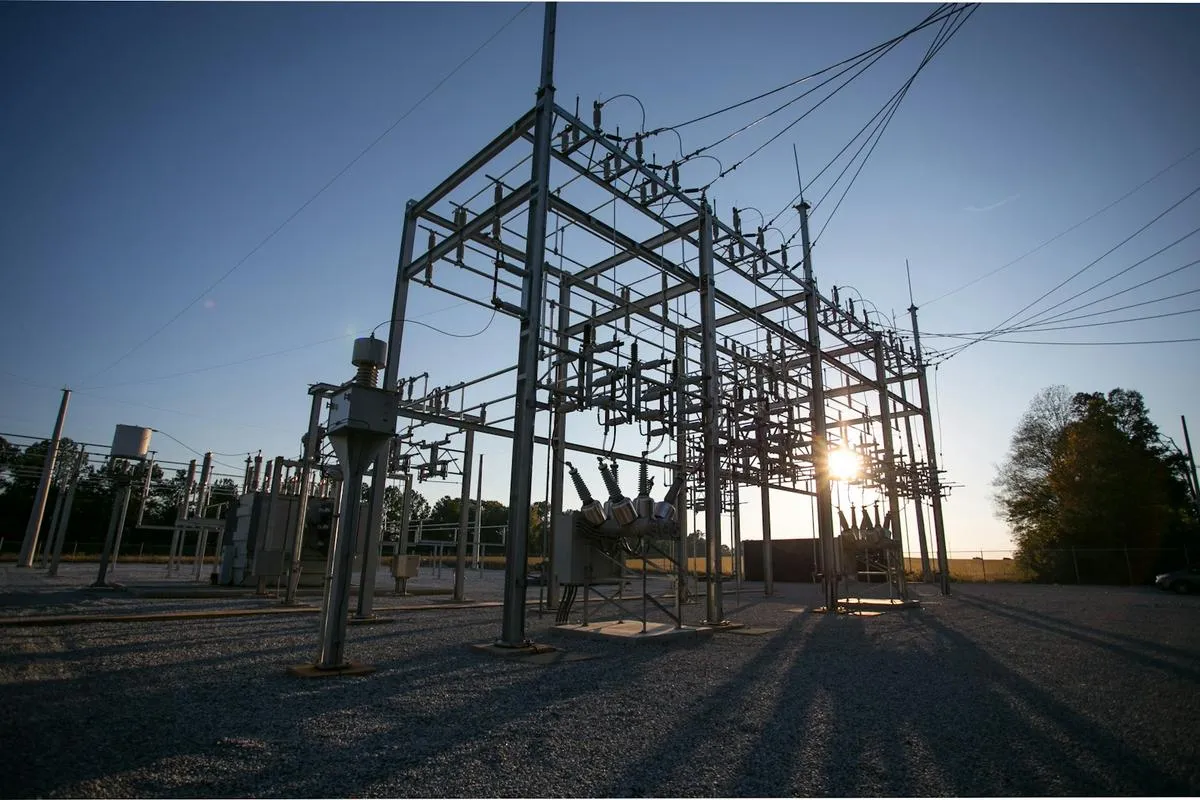
This is not a minor scheduling annoyance. It is a balance-sheet trap. Faster construction, celebrated as operational excellence, can actually worsen returns when grid interconnection, transmission upgrades, generation equipment, and local approvals remain slow. A company can shave months from concrete work, fiber installation, and mechanical-room assembly only to create a more expensive empty shell months earlier.
In ordinary commercial real estate, finishing early is usually good news. A tenant can move in. In AI infrastructure, a completed building without firm power is not inventory. It is a highly specialized asset with no practical use. The facility cannot sell compute, cannot test hardware at scale, and often cannot even commission its own systems properly.
The shortage that matters is not merely electricity. It is synchronized electricity: power that arrives at the right location, in the required quantity, under an enforceable commercial agreement, with enough grid stability to support dense AI workloads. That is much harder to buy than a parcel of land and a construction contract.
The Overlooked Angle
The overlooked angle is that accelerated data-center construction transfers project risk from builders to asset owners.
Construction technology is compressing the physical build cycle. Custom concrete mixes reduce testing time. robotic drilling reduces repetitive floor work. Modular electrical and mechanical rooms move labor off-site. Faster optical connectors reduce installation time across huge volumes of cable. These are genuine gains. They reduce labor hours, scheduling uncertainty, and the chance that a project stalls because one trade is late.
But none of these tools makes a transmission line appear faster. None creates utility substation capacity. None resolves a local moratorium driven by water concerns, electricity prices, diesel backup generation, or grid reliability. None produces turbine blades, transformers, switchgear, specialized electricians, or new generating capacity on the same timetable as a modular building.
That is the asymmetry.
A developer may reduce the building schedule by several months. Yet the power schedule remains governed by utility studies, interconnection queues, rights of way, permitting, equipment lead times, public resistance, and system-wide capacity planning. The building becomes fast; the grid remains slow.
In a normal project, reducing one critical-path item creates value. In this case, construction is no longer the critical path. Power is. Once that happens, further construction acceleration does not necessarily improve the project. It can merely bring forward the date at which the owner starts carrying a finished but unproductive asset.
The industry likes to call this “time to market.” That phrase hides the issue. A facility is not in the market when its walls are up. It is in the market when it can deliver contracted compute capacity reliably enough for customers to run expensive workloads. The relevant clock is not construction completion. It is energization and commissioning.
Why This Small Detail Matters
The energization gap matters because AI data centers are unusually capital-intensive and unusually intolerant of partial operation.
A warehouse can open one section at a time. A hotel can sell completed floors. An office building can lease space to smaller tenants as fit-outs are completed. A large AI data center has less flexibility. Its commercial value depends on an integrated system: servers, networking, cooling, high-voltage distribution, backup systems, utility feeds, and software orchestration. If a major component is missing, the facility may be worth far less than the sum of what has been installed.
Power constraints are particularly brutal because they affect every layer at once.
- Servers cannot generate revenue without electricity.
- Cooling systems cannot protect servers without electricity.
- Network equipment cannot support workloads without electricity.
- Customers cannot depend on capacity subject to curtailment or unstable local supply.
- Hardware procurement becomes dangerous when delivery dates do not match usable power dates.
This turns a power delay into a capital-allocation problem. If servers arrive before energization, the owner may hold rapidly depreciating equipment that is not producing output. If server delivery is delayed until power is available, the owner risks losing allocation in a constrained hardware market or missing customer demand. Either choice has a cost.
The fixed-cost burden is also severe. Land, site preparation, buildings, cooling infrastructure, substations, security, network commitments, engineering teams, debt service, and reserved equipment capacity do not wait politely for the grid. The longer the gap, the more the project resembles a prepaid option on future revenue rather than a functioning infrastructure asset.
That distinction matters because the market is spending aggressively on the assumption that compute demand will remain tight. But tight demand does not cure a mistimed asset. A facility that comes online late may enter a market with different chip economics, lower inference prices, competing capacity, or customers that have already signed elsewhere. Construction delay is bad. Power delay after construction completion is worse because the owner has already paid most of the bill.
The Economic Mechanism
The mechanism is not mysterious. It is a mismatch between the speed of capital deployment and the speed of revenue activation.
Consider the simplified sequence:
| Project stage | What happens | Economic effect |
|---|---|---|
| Site and building construction | Cash is spent on land, structure, cooling, and fit-out | Capital becomes committed |
| Electrical and server procurement | Deposits and purchase obligations accumulate | Working capital and financing needs rise |
| Grid interconnection delay | Utility power remains unavailable or restricted | Revenue activation is postponed |
| Temporary power solution | Turbines, generators, fuel, and maintenance are added | Operating cost and complexity rise |
| Full energization | Facility can finally commission and sell capacity | Revenue begins, but later than planned |
The danger sits between the third and fifth lines. The business has incurred much of its cost but has not reached commercial operation.
The return equation for a data center depends heavily on utilization and time. A simplified version is:
Return on invested capital = operating profit generated over the asset life divided by total capital committed.
The energization gap damages both sides. It delays operating profit while increasing total capital through financing expense, contingency spending, temporary-power costs, rework, and idle hardware. Even if the final facility operates successfully, a prolonged gap reduces the period in which it earns high returns before technology shifts again.
AI infrastructure makes this more acute because the useful economic life of top-end equipment can be shorter than the useful life of the building. The concrete shell may last decades. The most valuable compute hardware may face rapid performance obsolescence, resale pressure, or falling rental prices much sooner. A six-month delay matters more when the equipment cycle is measured in years rather than decades.
That is why fast construction can be economically perverse. It accelerates spending on long-lived physical assets and may force earlier commitments to short-lived hardware, while the revenue switch remains controlled by a third party: the utility and the broader power system.
The project owner does not control that bottleneck. This is the real leverage problem.
A contractor can promise faster installation. A server vendor can promise delivery. A financier can provide capital. But the utility cannot simply promise physics away. Grid capacity requires generation, transmission, substations, transformers, protection systems, skilled labor, permits, and often political consent. Each dependency has its own queue. The slowest one controls the opening date.
Temporary on-site generation appears to solve the issue. Often it merely changes it.
Gas turbines or repurposed jet engines can provide power where the grid cannot. But they introduce fuel logistics, emissions rules, noise concerns, maintenance demands, local opposition, and uncertain fuel economics. They also consume scarce turbine equipment. A supposedly temporary solution can become a permanent operating burden if the grid timeline slips again.
This is not cheap resilience. It is vertical integration forced by infrastructure failure.
The Strategic Consequence
The energization gap separates data-center players into two groups: those with power control and those with construction momentum.
The first group has an advantage that will not show up cleanly in glossy capacity announcements. These are firms with existing utility relationships, already energized campuses, contractual power rights, owned generation, transmission access, or locations where expansion can occur within an established electrical envelope. Their edge is not simply that they have more megawatts. Their edge is that their megawatts are usable sooner and with less uncertainty.
The second group may possess capital, land, political enthusiasm, and aggressive construction partners. But if they lack a credible energization path, they are exposed to the worst form of infrastructure risk: capital stranded in plain sight.
This changes what an intelligent buyer should value. Announced data-center capacity is weak evidence. Square footage is weak evidence. Even completed construction is weak evidence. The serious questions are narrower:
- Is the power contract executed or merely discussed?
- Is interconnection capacity reserved under enforceable terms?
- Which transmission and substation upgrades must be completed first?
- Who bears the cost if those upgrades exceed budget?
- Is the contracted power firm, interruptible, seasonal, or subject to curtailment?
- Can the site operate economically on backup or on-site generation?
- Are servers scheduled to arrive only after the power path is credible?
The winners will be disciplined enough to treat power availability as the first design constraint, not as an engineering detail appended after land acquisition.
This also shifts bargaining power upstream. Utilities, transformer suppliers, turbine manufacturers, electrical-equipment makers, and specialized electricians gain leverage because they sit near the true constraint. Their products and labor determine whether expensive downstream assets become productive. When every developer wants to build immediately, the constrained supplier does not need marketing theater. It can ration capacity, demand better contract terms, and choose customers with the most credible projects.
Meanwhile, construction companies may benefit from the boom without carrying the long-tail risk. They are paid to make buildings appear quickly. The developer owns the gap after handover. That is a clean transfer of risk, and it explains why speed can be rational for the contractor while being dangerous for the owner.
What Most Commentary Gets Wrong
Most commentary treats rapid construction as proof that the AI buildout is becoming more efficient. That is lazy accounting.
Construction efficiency is not project efficiency when another bottleneck dominates the cash-flow timeline. Saving six weeks on drilling or several months through modular fabrication is valuable only if it advances revenue. If power remains unavailable, the saving does not disappear physically, but it disappears financially. The asset still sits idle.
Another mistake is treating total investment as evidence of economic viability. Large spending proves that capital is willing to take risk. It does not prove that the resulting facilities will earn adequate returns. In fact, a rush to solve shortages can make viability harder to assess because it inflates the price of every constrained input: materials, labor, equipment, financing, and power.
The more money thrown at a bottleneck, the more important sequencing becomes. If every participant orders equipment early, builds aggressively, and competes for the same power infrastructure, the result can be a queue of increasingly expensive projects waiting for the same enabling asset.
There is also a false comfort in saying that demand will absorb all available compute. Demand may be strong and the investment can still be badly timed. A profitable market does not rescue a company that commissions late, pays peak input prices, or carries idle hardware through a technology transition. Good markets punish poor sequencing less than bad markets do. They do not eliminate the punishment.
The central error is confusing activity with throughput. Construction activity is visible. Trucks, cranes, concrete, new campuses, and capital-expenditure announcements create the appearance of progress. Throughput is the actual ability to convert electricity into sold compute hours at an acceptable cost. Only the second one produces durable returns.
The Hard Business Lesson
The hard lesson is that the fastest part of a project should never dictate the investment schedule when the slowest part controls revenue.
AI data-center developers are right to pursue better construction methods. Faster builds reduce execution risk when power, equipment, and customer commitments are aligned. But speed becomes destructive when it outruns energization. It pulls cash forward, magnifies financing exposure, pressures hardware procurement, and creates specialized assets that cannot earn until an external bottleneck clears.
The sensible strategy is boring, which is why many companies will resist it. Build only against a credible power path. Stage hardware commitments around energization milestones. Price temporary generation as a real operating system rather than a heroic fallback. Demand contracts that assign delay risk clearly. Treat utility capacity as scarce inventory, not as an assumed public service.
The AI boom may continue longer than skeptics expect. Exponential investment cycles often do. But the businesses that survive them are not necessarily those that build the most impressive shells first. They are the ones that understand a brutal infrastructure fact: a data center is not a data center until power turns it into one.
Everything before that is expensive architecture.