The Real Inflation Wave Is Still Coming
The recent spike in the Consumer Price Index was entirely predictable. To see the headline number jump and feign surprise is an exercise in willful ignorance. This is not the crisis. This is merely the overture, the loud and obvious shock of direct energy costs hitting household budgets. The market is reacting to the symptom, not the disease. The true test of economic resilience—and corporate competence—is the second-order wave of inflation currently working its way through the global supply chain. That wave has not yet crested, and it will be far more destructive than a higher number at the gas pump.
To understand the pressure building in the system, one must differentiate between first-order and second-order effects. The first is simple, immediate, and what the headlines obsess over. The second is complex, delayed, and what determines which businesses will survive the coming margin compression.
The Obvious Shock: First-Order Effects
The March CPI data reflects the immediate pain consumers feel. These are the costs you cannot avoid if you wish to participate in a modern economy. They are, in effect, a regressive tax on existence.
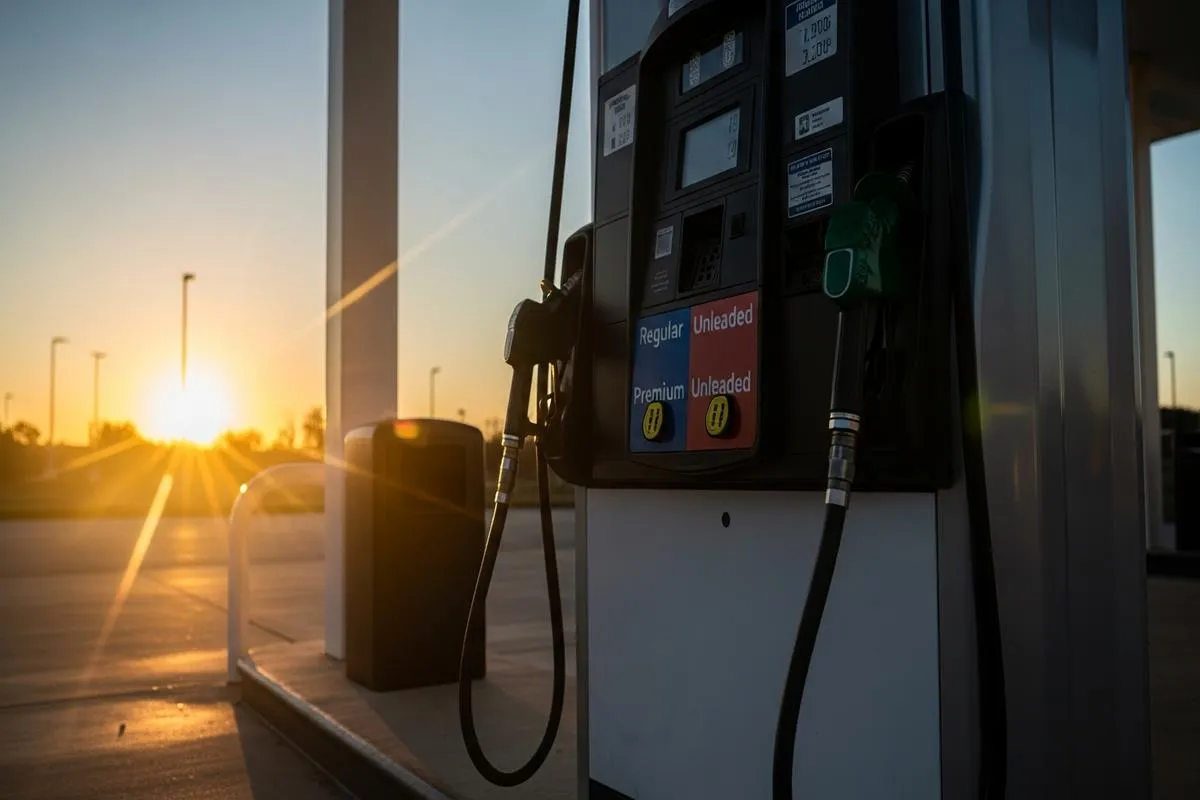
First, consider gasoline. The index spiked dramatically, but the mechanism is more revealing than the number itself. The United States is the world’s largest energy producer and a net exporter of petroleum products. A domestic price surge of this magnitude is not a simple story of domestic scarcity. It is a story of global market dynamics and immediate margin capture. Energy speculation is a global game played in microseconds. When a geopolitical event occurs, the price of a barrel of oil is repriced instantly. That price change is transmitted to the pump long before the physical product refined from that more expensive barrel arrives. The gasoline sitting in the underground tank at your local station was purchased and refined at a lower cost. The price spike is the retailer, distributor, and refiner capturing the full upside of the new global price. It is a textbook example of pricing to the market, not pricing to cost.
This immediate price pass-through hits lower-income households with the greatest force. Their consumption is inelastic; the commute to a job is not optional. This is the most visible and politically sensitive aspect of inflation, but from a strategic perspective, it is also the least interesting. It is a simple transfer of wealth from consumers to energy producers and retailers.
Next, look at utilities—specifically electricity and natural gas. Here, the mechanics are different but the outcome is the same. The prices for these essentials have surged over the long term, far outpacing general inflation. This is not a failure of markets; it is a feature of their structure. Most consumers purchase electricity and gas from regulated monopolies. These entities operate under a framework that often guarantees a return on invested capital. Their incentive is not necessarily to procure energy at the lowest possible cost, but to engage in capital expenditures that can be added to the rate base, thus increasing their guaranteed profits. Competition is negligible, with rooftop solar being one of the few disruptive threats. Consequently, when the input cost of natural gas for a power plant rises, that cost is passed directly through to a captive customer base. There is no competitive pressure to absorb the increase or find efficiencies. The consumer simply pays more. The 41% increase in the electricity index since January 2020 is not an accident; it is the logical outcome of this business model.
Even with the US being a powerhouse of natural gas production, often extracted as a cheap byproduct of oil drilling, households see little of that benefit. The pricing structure is insulated from the raw realities of supply. These direct costs are the first tremors. They reduce discretionary spending and create political noise, but they do not fundamentally challenge the structure of most businesses.
The Coming Squeeze: Second-Order Effects
The real story is not what consumers pay directly for fuel, but what every business pays indirectly for everything. Energy is the master input cost. It is embedded in every physical product and nearly every service. The cost of manufacturing, the cost of logistics, the cost of data storage—all are direct functions of the price of energy. This is where the strategic challenge lies.
The transmission of these costs into the broader economy is slow and uneven. It is a function of inventory cycles, contractual agreements, and, most importantly, pricing power. A business facing higher input costs has three choices:
- Absorb the cost: This leads to margin compression. Profits decline, investment capacity is reduced, and the business becomes financially vulnerable.
- Pass the cost to the customer: This is only possible if the business has strong pricing power, meaning customers are willing and able to pay more without significantly reducing their purchase volume.
- Find offsetting efficiencies: This involves restructuring operations, optimizing supply chains, or reducing other costs to counteract the energy price hike. This is the hardest path and the true mark of operational excellence.
Consider the airline industry, a classic case study in margin pressure. Airline fares have risen, but not in lockstep with jet fuel prices. An airline’s cost structure is brutal—high fixed costs for aircraft, labor, and gates, combined with a highly volatile key input cost. CEOs can announce fare hikes, but the market has the final say. If they raise prices too aggressively, load factors fall. An empty seat is a perishable good; its potential revenue is lost forever the moment the plane takes off. Therefore, airlines must constantly balance fare integrity against passenger volume. They attempt to hedge fuel costs, but this is an imperfect financial shield. Ultimately, a sustained period of high energy prices crushes airline profitability. They are on the front lines of the battle between cost pass-through and demand destruction.
This dynamic extends far beyond airlines. Think of a producer of plastic packaging. The primary feedstock for most plastics is derived from petroleum. A spike in oil prices directly translates to a higher cost of goods sold. This manufacturer now faces the three choices. Can it raise the price of its plastic bottles? Perhaps, but its customers—the beverage and consumer goods companies—are also under margin pressure. They will push back, seek alternative suppliers, or explore different packaging materials. The manufacturer’s ability to pass on the cost is severely constrained by the competitive landscape.
Now consider a grocery retailer. Its direct energy consumption for refrigeration and lighting is immense. But the bigger impact comes from its suppliers. The cost to transport produce from the farm to the distribution center rises with the price of diesel. The cost to produce a box of cereal rises with the natural gas used to run the factory and the petroleum used to make the plastic bag inside. The grocer sits at the end of a long chain of cost increases. With notoriously thin margins, it cannot absorb these hikes indefinitely. But raising prices is also dangerous. Consumers are highly price-sensitive when it comes to groceries and can easily switch stores or trade down to cheaper brands. The grocer is caught in a margin vise.
This is the second wave. It is a slow, grinding process of renegotiating prices throughout the entire supply chain. It is a corporate stress test that reveals which companies have genuine brand loyalty, superior operational efficiency, and a defensible competitive position.
The Strategic Miscalculation
This brings us to the core strategic error being made by many analysts and central bankers: the obsessive focus on “core” inflation, which excludes food and energy. The distinction is presented as a way to see the underlying trend by removing volatile components. In a stable environment, this might be a useful abstraction. In the current environment, it is a dangerous delusion.
Treating energy as a volatile, external factor is to fundamentally misunderstand its role. It is not an externality; it is the foundation. A sustained increase in the cost of energy is the underlying trend. It will inevitably bleed into every single component of the “core” index. The cost of a haircut goes up because the rent for the salon goes up (higher utility bills) and the cost of supplies goes up (transportation costs). The cost of a software subscription goes up because the data centers that power it face astronomical electricity bills. To ignore the headline number is to ignore the primary driver of future core inflation.
This second wave of cost pressure forces a strategic reckoning within businesses. Companies that have thrived on cheap capital and inefficient operations will be exposed. The focus must shift from growth-at-all-costs to profitable, sustainable operations. The critical questions for any leadership team are no longer about market expansion, but about operational resilience:
- What is our true energy dependency, both direct and indirect?
- Where in our supply chain is the greatest margin pressure accumulating?
- Do we have the pricing power to protect our margins, or will we be forced to absorb costs?
- What operational changes can we make to create a permanent efficiency advantage?
The March CPI figures are a warning shot. They signal a shift in the fundamental cost structure of the global economy. The immediate impact on consumers is significant, but the delayed, systemic impact on corporate profitability will be far more consequential. We are about to see which business models were built on solid ground and which were simply benefiting from an era of cheap energy. The first wave hit the consumer. The second wave is coming for corporate balance sheets. That is the only story that matters.