The Silent Exit of Smart Money
Politics is often the art of locking the barn door after the horse has not only been stolen but has already been sold, butchered, and turned into glue. The recent push to block landlords owning 100 or more single-family rental (SFR) homes from purchasing existing inventory is a textbook example of this phenomenon.
The headline creates a convenient villain: the faceless, multi-billion-dollar private equity firm swooping into the American suburbs to steal the American Dream from the working class. It is a compelling narrative. It is also analytically bankrupt.
If you look at the capital flows, the operational shifts, and the raw data, a different reality emerges. The “smart money”—the institutional giants like Blackstone, Invitation Homes, and AMH—stopped aggressively buying existing starter homes years ago. In fact, they are net sellers. They have already identified that the arbitrage opportunity of the post-2012 era is dead. They are pivoting to a new model that offers better margins and lower operational drag.
This proposed ban is performative. It attempts to regulate a behavior that the market has already corrected. However, while the ban will do nothing to lower prices today, it introduces a dangerous variable into the mechanics of a future market correction.
Here is the logic behind the shift, and why the real force in the housing market is the one nobody talks about.
The Myth of the Corporate Monolith
To understand why the proposed legislation is largely irrelevant to current pricing, you have to look at the ownership structure of the US housing market. The public perception is that Wall Street owns Main Street. The data suggests otherwise.
According to John Burns Research and Consulting, landlords owning 100 or more properties control only about 6.3% of the single-family rental market. If you were to confiscate every single key from every single institutional investor tomorrow, you would barely make a dent in the overall rental landscape.
The true leviathan in the room is the “mom-and-pop” investor. These are landlords owning between 1 and 10 units. They control a staggering 82.6% of the single-family rental market. This is the dentist who buys a rental property in the next town over, the retiree looking for yield, or the homeowner who upgrades but keeps their first house to rent out.
This is a swarm dynamic. Unlike institutional capital, which moves based on investment committee memos and interest rate forecasts, the mom-and-pop cohort moves on sentiment and local opportunity. They are the ones bidding up prices in school districts. They are the ones swarming open houses. They are largely invisible to regulators because they don’t file quarterly earnings reports, yet they are the dominant force setting the floor for rental prices.
A ban on entities owning 100+ homes ignores 82.6% of the problem. It is an attempt to drain the ocean with a spoon, while ignoring the tide.
The Operational Pivot: Why Wall Street is Selling
Let’s look at the behavior of the institutions themselves. The narrative suggests they are voracious buyers. The balance sheets tell us they are sellers.
In the aftermath of the 2008 financial crisis, the trade was obvious. You could borrow money for near-zero interest, buy distressed assets out of foreclosure for pennies on the dollar, and rent them out. It was a liquidity play. The Federal Reserve essentially invited private equity to bail out the banks by absorbing toxic housing inventory.
That trade is over. The arbitrage window has slammed shut. House prices have appreciated to the point where the capitalization rates (cap rates) on existing homes no longer justify the acquisition cost, especially when you factor in the cost of debt today.
Furthermore, institutions have learned a hard lesson about “scattered-site” operations. Managing 50,000 homes is not difficult if they are in 200 apartment buildings. Managing 50,000 individual houses scattered across three time zones and thousands of different zip codes is a logistical nightmare.
- Maintenance Inefficiency: When a toilet breaks in an apartment complex, the on-site super fixes it. When a toilet breaks in a scattered-site rental, you have to roll a truck 45 minutes across town. That kills margins.
- CapEx Volatility: Older homes have older problems. Roofs, HVAC systems, and foundations in existing stock are variable costs that are hard to predict at scale.
Because of this, the major players—Invitation Homes, AMH, Progress Residential—are dumping their scattered inventory. They are selling older homes into the open market to realize the capital gains from the last decade of appreciation. They aren’t buying your neighbor’s house; they are selling the one they bought in 2012.
The New Strategy: Build-to-Rent (BTR)
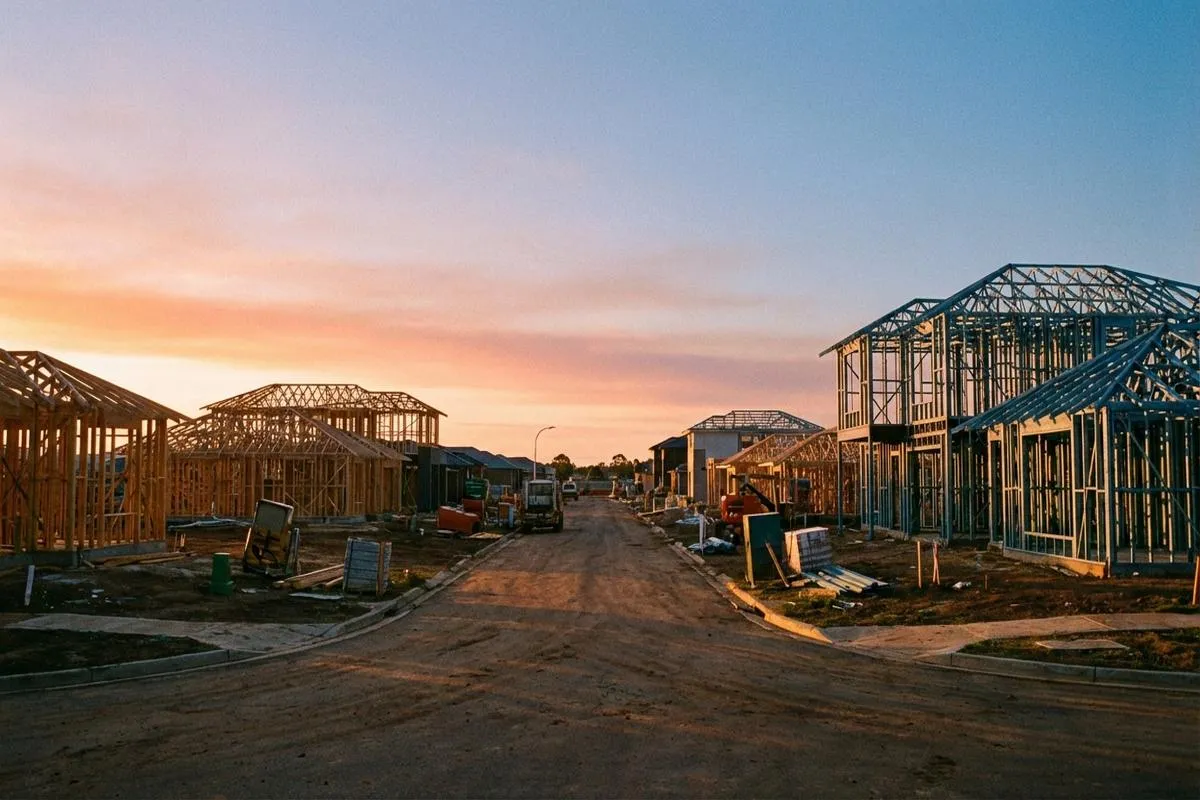
The capital hasn’t left housing; it has just moved up the supply chain. The new model is “Build-to-Rent.”
Instead of fighting with retail buyers for 40-year-old houses, institutions are partnering with builders or starting their own development divisions to build entire communities of rental homes. This solves the operational problems of the scattered-site model:
- Density: You own the whole street. One maintenance crew can service 200 homes.
- Standardization: Every HVAC unit is the same brand. Every roof is the same material. Procurement costs drop.
- Warranty: New homes don’t break. For the first 5-10 years, capital expenditure is negligible.
Take Progress Residential. They own nearly 100,000 homes. But they aren’t buying one-off houses anymore. Since 2022, they have focused almost exclusively on acquiring entire BTR developments—over 70 communities totaling 10,000+ homes.
Look at Invitation Homes (INVH). In 2025, they sold over 1,300 of their older, scattered homes for an average of $393,800. What did they buy? They bought 2,410 new homes, almost entirely from builders in BTR communities, for an average of $336,900. They are selling high-maintenance, expensive assets and buying low-maintenance, cheaper assets. That is not predation; that is basic asset management.
American Homes 4 Rent (AMH) is doing the same. They launched their own homebuilding division years ago. In 2025, they delivered over 2,300 newly constructed homes specifically for their rental portfolio. They are effectively a construction company that retains its own inventory.
This shift is critical to understand because the proposed ban explicitly allows for this. The legislation targets the purchase of existing homes. It does not stop institutions from building new homes. Since the smart money has already shifted to building, the legislation effectively bans a behavior they have already abandoned.
The Case Studies in Liquidity
To drive this point home, we must look at the specific movements of the largest players. The data provided by company filings creates a clear picture of an exit strategy, not an accumulation strategy.
- Blackstone: Often cited as the boogeyman of housing. After spinning off Invitation Homes, they re-entered the market by acquiring Home Partners of America and Tricon Residential. However, Tricon is heavily focused on development (BTR). They aren’t scouring the MLS for bargains; they are manufacturing yield through construction.
- FirstKey Homes: Owned by Cerberus, they manage over 52,000 homes. Like their peers, they have transitioned into net sellers of scattered-site properties.
- The Amherst Group: While they still renovate, their model has increasingly moved toward BTR and selling renovated stock directly to consumers.
The pattern is uniform across the top six landlords. They are rotating capital out of the existing housing stock and into new construction. The market forces—high interest rates, high home prices, and operational friction—did more to stop them from buying existing homes than any act of Congress ever could.
The Unintended Consequence: Removing the Safety Net
If the ban is functionally useless in the current market, does it matter at all? Yes, but only in the worst-case scenario.
The one function large institutional capital serves in the housing market is providing a floor during a collapse. In 2012, when banks were drowning in foreclosures and neighborhoods were rotting, it was private equity that stepped in with billions of dollars to clear the books. They provided liquidity when there was none.
They didn’t do this out of charity; they did it because the assets were mispriced. But the effect was stabilization. They put a floor under the housing market.
If we implement a ban on large entities buying existing homes, we are removing the “buyer of last resort.” If the housing market crashes again—if unemployment spikes and forced selling begins—the mom-and-pop investors won’t have the capital to catch the falling knife. They will be the ones selling.
Without institutional capital allowed to enter the market to absorb distressed inventory, a housing correction could turn into a freefall. The ban ensures that during a liquidity crunch, the assets become illiquid. Banks will be stuck with foreclosures they cannot sell in bulk, dragging out the recovery and depressing property values for everyone else for longer.
Conclusion: The Logic of Value
The narrative that banning large landlords will fix housing affordability is a comforting fiction. It ignores the math of market share, where small investors dwarf the giants. It ignores the operational reality, where giants are already leaving the existing home market to build their own inventory.
The housing market is suffering from a supply shortage and a monetary policy hangover. Blaming the players who own 6% of the market while ignoring the mechanics of the other 94% is bad strategy.
We must follow the value. Currently, the value for institutions is in construction, not acquisition. They have already moved on. The legislation is simply erecting a fence around an empty field, while the herd grazes elsewhere. The only time we will notice the gate is locked is when the market catches fire and the fire trucks are stuck outside.