Conflict Is Russia’s Most Profitable Export
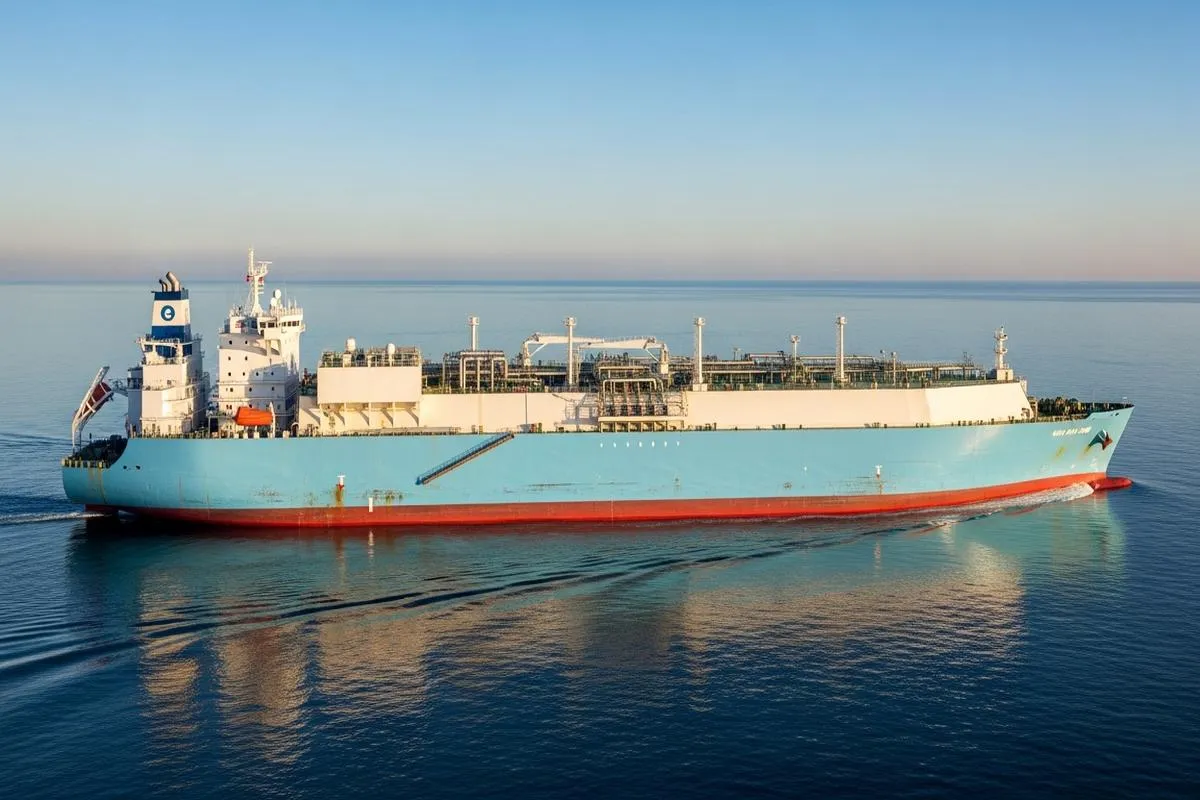
Political commentary on a potential conflict with Iran is predictably loud and morally absolute. It fixates on justifications, human rights, and the theater of international diplomacy. This is a distraction. To understand the real consequences, you must ignore the political narrative and instead follow the value. Wars, especially in the energy-rich Middle East, are not just geopolitical events; they are violent, unpredictable catalysts that restructure global markets. And in this restructuring, the primary beneficiary is not a participant, but a spectator with a vested interest in the chaos: Russia.
A conflict involving Iran, regardless of its trigger or duration, creates a series of predictable, high-impact consequences. It introduces extreme volatility into energy markets, reroutes diplomatic attention, and fractures supply chains. Western strategists may believe they are acting to contain a threat, but the functional reality is that they are engineering a scenario that transfers enormous economic and strategic leverage directly to the Kremlin. This isn’t a conspiracy; it’s a simple, brutal calculation of incentives and structural market advantages. The biggest winner of a war against Iran is, without question, the Russian Federation.
The Crude Mathematics of Volatility
The most immediate and visceral impact of conflict in the Persian Gulf is on the price of oil. The mechanism is simple. The threat of disruption to Iranian oil production and, more critically, to the free passage of tankers through the Strait of Hormuz—the world’s most important oil chokepoint—forces a risk premium into every barrel of crude traded globally. It doesn’t matter if a single shot is fired at a tanker; the perceived risk is enough to send prices soaring.
For most of the world, this is an economic disaster. It fuels inflation, increases transportation costs, and puts immense pressure on household budgets and industrial production. For the Russian state, it is a financial windfall of strategic proportions. Russia is one of the world’s top three oil producers. Its federal budget is fundamentally dependent on revenues from hydrocarbon exports. Every dollar increase in the price of Brent crude translates directly into billions of additional, unbudgeted revenue flowing into state coffers.
Unlike Saudi Arabia or the UAE, whose shipping routes are in the direct line of fire, Russia’s primary export infrastructure is geographically insulated from a Persian Gulf conflict. Its pipelines run west into Europe and east into Asia. Its key ports are in the Baltic, the Black Sea, and the Pacific. While its competitors face heightened insurance costs, logistical nightmares, and direct physical threats, Russia can continue to produce and export with near-total impunity, selling its product into a market panicked by scarcity.
This influx of cash is not merely a bonus. It is a strategic enabler. It provides the Kremlin with the financial resources to absorb the impact of Western sanctions, to fund its military modernization, and to sustain costly operations, such as its war in Ukraine. A high oil price, courtesy of Middle Eastern instability, acts as a direct subsidy for Russia’s own geopolitical ambitions. Western policy, ostensibly aimed at stabilizing one region, ends up financing the destabilization of another. It’s a strategic contradiction of the highest order, yet one that is consistently ignored in favor of short-term political posturing.
The Gas Leverage Play
The strategic benefits for Russia extend well beyond oil. Europe’s multi-year effort to wean itself off Russian natural gas is predicated on a massive pivot to Liquefied Natural Gas (LNG). A significant portion of these LNG imports, particularly from Qatar, must transit the same vulnerable maritime corridors as oil tankers. A conflict involving Iran immediately jeopardizes this critical supply chain.
Suddenly, Russian pipeline gas, for all its political toxicity, starts to look reliable again. The risk equation for European policymakers shifts dramatically. An LNG tanker is a vulnerable, slow-moving target. An underwater pipeline is a secure, direct delivery mechanism. The instability created by a war in the Gulf makes Russia a more indispensable energy partner to Europe, not less. It undermines the entire strategic logic of diversification.
This gives Gazprom, and by extension the Russian state, renewed leverage over the European continent. It can use the threat of supply cuts not as a primary weapon, but as a negotiating tool against a backdrop of global LNG uncertainty. As winter approaches, the choice for a German or Italian industrialist is not between a politically palatable energy source and a distasteful one. It is between Russian gas or no gas at all. The price of virtue becomes deindustrialization.
This is a classic example of exploiting second-order effects. The conflict itself has nothing to do with European gas markets. But by creating systemic risk in a competing supply chain, it enhances the value and strategic importance of Russia’s own assets. Western actions, aimed at one adversary, inadvertently strengthen the hand of another.
Geopolitical Arbitrage: The Economics of Attention
The most subtle but perhaps most significant advantage for Russia is the diversion of Western strategic attention. The United States, NATO, and the European Union have finite resources: diplomatic bandwidth, intelligence assets, military hardware, and financial aid. A full-blown crisis with Iran would consume a colossal amount of these resources.
This creates a power vacuum elsewhere. While the world’s media and political leadership are fixated on the Persian Gulf, Russia gains a free hand to pursue its objectives in its near-abroad with significantly less scrutiny and resistance. Consolidating control in occupied Ukrainian territories, pressuring Moldova, or expanding influence in the Caucasus becomes far easier when the world’s primary security guarantor is preoccupied thousands of miles away.
This is a form of geopolitical arbitrage. Russia can achieve its strategic goals at a much lower cost because the cost of intervention for the West has skyrocketed. A sternly worded condemnation from Washington or Brussels carries little weight when it is clear their operational focus is entirely elsewhere. Russia is able to exploit the gap between the West’s stated global commitments and its actual capacity to act.
Furthermore, a conflict with Iran would likely alienate key regional players and fracture the very alliances the US relies on to project power. Nations like Turkey, India, and even some Gulf states would be forced into complex balancing acts, creating diplomatic openings for Russia to present itself as a stable, pragmatic alternative to American volatility. It can play the role of the power broker, the mediator, the adult in the room, all while profiting from the chaos initiated by others.
The Failure of Linear Strategy
The underlying flaw in any Western strategy that leads to this outcome is its linear thinking. It operates on a simple premise: apply pressure to an adversary to achieve a desired change in behavior. This model completely fails to account for the complex, interconnected nature of the global system. It treats geopolitics like a game of checkers when it is, in fact, a multi-dimensional chess match.
By initiating a conflict, the West introduces massive, unpredictable energy into this system. It assumes it can control the outcome. But the volatility it unleashes is its own worst enemy. It creates market conditions and strategic distractions that are perfectly suited for an opportunistic actor like Russia to exploit. The policy, therefore, produces the exact opposite of its intended long-term effect. Instead of reinforcing a stable, rules-based order, it rewards a revisionist power that thrives on its disruption.
It is a policy that imposes severe economic costs on itself—in the form of higher energy prices and inflation—while simultaneously delivering a massive financial stimulus package to its primary strategic competitor. It is an exercise in self-harm, disguised as a show of strength.
To see the world clearly, one must look past the stated intentions and analyze the incentives and the flow of value. The narrative of containing Iran is just that—a narrative. The reality is a set of actions that would lead to a dramatic and predictable transfer of wealth and power to Moscow. The entity that benefits most from the disruption of the status quo is the winner. In this case, the winner is clear.