The Housing Market Is Officially Frozen
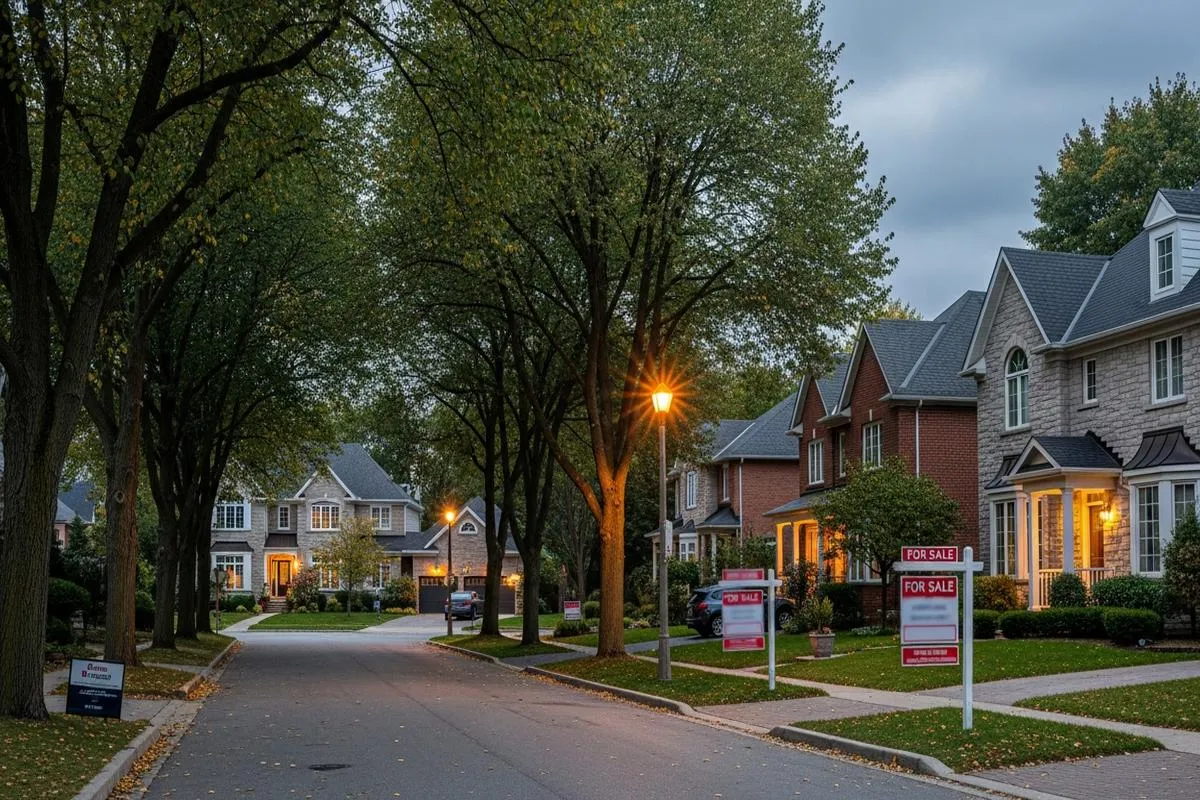
The narrative of a ‘lousy spring selling season’ is a dangerous understatement. The American housing market is not experiencing a seasonal dip or a minor correction; it is in a state of structural seizure. Transaction volume, the lifeblood of any market, has collapsed. This isn’t a slowdown. It’s a deep freeze, a standoff between sellers anchored to yesterday’s bubble prices and buyers paralyzed by today’s economic reality. The data for March doesn’t suggest weakness, it confirms a fundamental market failure where price discovery has ceased.
When sales of single-family homes fall 3.5% in a single month and are down nearly 32% from the 2021 peak, it signals more than just hesitant buyers. It reveals a chasm between the perceived value of an asset and the capacity of the market to finance it. This is demand destruction on a national scale. The modest uptick in mortgage rates is a distraction; the damage was done when the cost of capital doubled. We are now witnessing the consequences: a market that is functionally broken, characterized by low volume, rising inventory, and delusional price stability.
The Illusion of Price Stability
The most misleading metric in the current discourse is the national median home price. A reported 1.2% year-over-year increase is statistical noise, designed to placate homeowners and obscure underlying decay. A national median is a poor instrument for analysis; it flattens regional volatility and is easily skewed by the composition of what little is selling. The real story is found in markets where the froth was thickest, like Austin or Oakland, which have seen significant price erosion. Conversely, marginal gains in New York or Chicago do not signal health; they signal a market less exposed to the speculative mania of the last cycle.
The stability of the median price is a symptom of the freeze, not a contradiction of it. With sales volumes this low, the transactions that do occur are not representative of the broader market. They are often forced sales, estate settlements, or unique properties that defy general trends. The average seller, not under duress and clinging to the memory of a neighbor’s 2022 sale price, is simply refusing to participate. They have not lowered their price; they have withdrawn from the market. This creates an illusion of price strength because the only data points being recorded are from the few transactions that can clear at or near these elevated levels. Price discovery fails when liquidity vanishes. The current median price tells you nothing about the true market-clearing price for the millions of homes that are not for sale but would be if owners accepted reality.
Demand Has Been Decimated
The raw sales numbers are unambiguous. A fall to a 3.63 million annual rate for single-family homes is a catastrophic decline from the cycle’s peak. Comparing to March 2022, sales are down over 28%. This isn’t a negotiation tactic from buyers; it’s a hard stop imposed by affordability. The simple calculation of monthly income versus the principal, interest, taxes, and insurance (PITI) on a median-priced home with a 6.5% mortgage is untenable for a vast swath of the population.
This is not a crisis of confidence. It is a crisis of mathematics. The wage growth of the past three years has been entirely consumed by inflation and then dwarfed by the rise in financing costs. No amount of consumer sentiment can bridge a gap of a thousand dollars or more in a monthly payment.
The situation in the condominium and co-op market is an even starker warning. The 5.4% monthly plunge to a record low of 350,000 annual sales is telling. Condos are often the entry point for first-time buyers and a target for smaller-scale investors. The collapse in this segment indicates that both of these crucial buyer pools have been completely wiped out. The first-time buyer is locked out by affordability, and the investor can no longer make the rental yield math work against the high cost of capital and ownership. This is a leading indicator. When the most accessible rung of the property ladder breaks, the entire structure is compromised.
Supply Is a Function of Failure
Supply hitting a 10-year high at 4.1 months is a direct consequence of the demand collapse. It is crucial to understand that ‘months of supply’ is a ratio: inventory divided by the sales rate. While inventory has ticked up, the primary driver of this alarming metric is the denominator’s collapse. The same number of homes on the market now represents a much larger overhang because they are sitting unsold for longer.
This dynamic refutes the narrative that a simple lack of inventory is propping up prices. There is a lack of desirable inventory at an affordable price. The ‘lock-in effect’ is real; homeowners with sub-4% mortgages have a powerful disincentive to sell and re-enter the market as a buyer at current rates. This restricts the flow of high-quality homes. However, the homes that are coming to market—due to death, divorce, job relocation, or financial distress—are contributing to a growing pool of stale listings. This is the inventory that is measured, and it is not moving. The market is bifurcated: one segment of owners who cannot afford to move, and another segment of sellers who cannot find a qualified buyer at their asking price.
This growing supply overhang exerts immense downward pressure on prices. Every additional month a property sits on the market, the carrying costs for the seller increase, and the pressure to capitulate on price mounts. The 10-year high is a clear signal that the market’s balance of power has shifted decisively toward the few remaining buyers. The only thing preventing widespread price drops is seller inertia and the lingering hope of a return to lower rates.
Mortgage Rates: The Catalyst, Not The Cause
Focusing on modest weekly fluctuations in mortgage rates is missing the point entirely. The shift from a 3% to a 6-7% mortgage environment was a regime change. It fundamentally altered the value proposition of homeownership. An asset priced for a world of nearly free money is now being stress-tested by a normalised cost of capital, and it is failing.
The argument that current rates are ‘historically low’ is irrelevant. Asset prices are not set against a 50-year average; they are set against the financing conditions of the immediate past. The housing bubble from 2020 to 2022 was inflated directly by the Federal Reserve’s policy of quantitative easing, which artificially suppressed mortgage rates to levels far below inflation. That policy created an affordability illusion that drove prices to unsustainable heights.
Today’s rates are not the problem. They are the pin. The problem was, and remains, the price of the asset itself. The market has not repriced to reflect the new cost of borrowing. The freeze exists because sellers are still offering assets valued for a 3% world, while buyers can only underwrite them in a 7% world. This gap cannot be closed by minor rate dips. It requires either a significant increase in wages (which is not happening at the required scale) or a significant decrease in asset prices. Given the economic fundamentals, the latter is the only plausible path to restoring market function.
The Inevitable Thaw
The market is caught in a state of suspended animation. Transactions are frozen, price discovery is nonexistent, and both buyers and sellers are waiting for the other side to break. This standoff cannot last indefinitely. The carrying costs for sellers, the life events that force relocation, and the simple economic need for liquidity will eventually force capitulation. The longer the market remains frozen, the more pressure builds. The eventual thaw will not be a gentle return to normalcy. It will likely be a rapid and painful repricing event as waves of sellers who can no longer wait are forced to meet the market where it actually is, not where they wish it were. The data is not telling us the spring season is slow; it’s telling us that winter is still here, and it’s a long way from over.