The Cloud Sells AI Risk Back to Customers
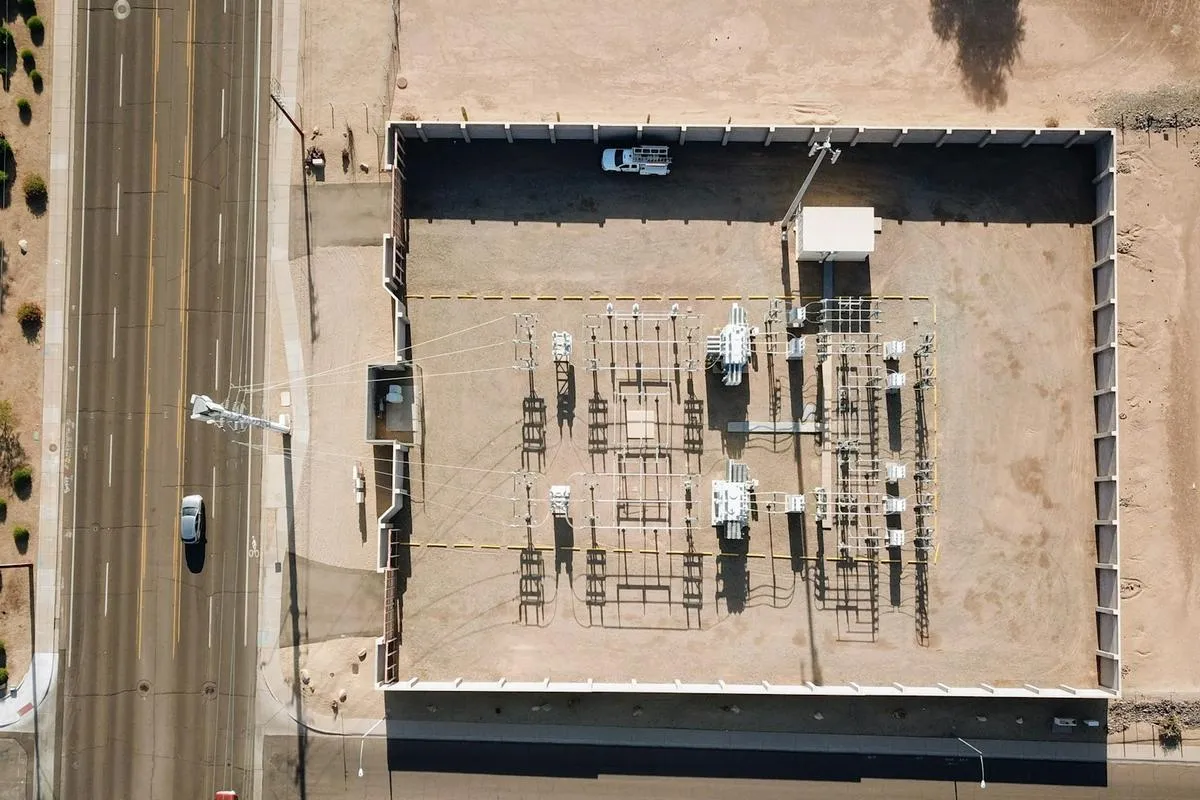
The AI gold rush is not really a race to build the best model. It is a race to avoid owning the wrong hardware at the wrong moment.
Investors see rising data-center spending and ask the obvious question: what happens if artificial intelligence demand disappoints? It is a reasonable question, but it is usually aimed at the wrong target. The real distinction is not between companies spending heavily on AI and companies spending cautiously. It is between companies buying computing capacity for one fragile business model and companies owning a distribution system that can resell that capacity across thousands of customers and workloads.
That is why Amazon, Microsoft, and Google occupy a different position from AI labs, chip designers, and even other large technology companies. Their advantage is not merely that they have more cash. Cash helps, but cash is a commodity. Their deeper advantage is that they can convert AI infrastructure from a speculative asset into a pooled, metered utility.
A GPU cluster is expensive. It also becomes obsolete quickly, consumes power continuously, requires scarce networking equipment, and earns nothing when it is idle. The hyperscaler that controls cloud distribution can move that capacity among customers, products, contract structures, and workload types. The company that buys the same equipment for a single model program cannot.
That difference is where the economics sit.
The Overlooked Angle
The overlooked angle in the AI investment boom is capacity fungibility: the ability of a cloud provider to redeploy expensive AI infrastructure across many buyers before its economic value decays.
Most analysis focuses on whether generative AI revenue will justify data-center capital expenditure. That framing is too blunt. It treats all AI spending as if it carries the same risk. It does not.
For a standalone AI developer, a large GPU purchase is a concentrated bet. The machines are tied to its research agenda, product adoption, model architecture, and funding runway. If demand slows, the company still owns the depreciation, the power bill, the engineers, and the contractual commitments. It may have customers eventually. It may not. Either way, the hardware clock is running.
For a hyperscale cloud provider, the same GPU fleet can support several revenue streams:
- training runs for model developers;
- inference capacity for enterprise software vendors;
- managed AI services sold to existing cloud customers;
- reserved capacity contracts with large corporations;
- on-demand compute for short, high-margin bursts;
- internal products such as search, productivity software, advertising, and consumer AI features;
- adjacent high-performance computing workloads when AI demand softens in a particular segment.
This does not mean every server can be reassigned instantly or that every workload fits every accelerator. That would be marketing fiction. Specialized chips, software stacks, network configurations, geographic restrictions, and customer commitments all reduce flexibility. But the central fact remains: a cloud platform has far more ways to keep a depreciating asset occupied than a company whose business depends on one model, one application category, or one customer segment.
The winner is not simply the owner of the most GPUs. It is the owner with the broadest queue of potential users for every GPU hour.
Why This Small Detail Matters
AI hardware has a brutal economic property: its useful commercial life is often shorter than the financing story built around it.
A data center is not a software product. It cannot be copied at near-zero cost. It requires land, power access, cooling, construction, network equipment, chips, maintenance, and long procurement cycles. Much of that cost is committed before revenue arrives. Once the facility is running, underutilization is not a temporary embarrassment. It is a direct margin problem.
The unit that matters is not the number of chips installed. It is productive compute capacity sold over the asset’s economically useful life.
A simplified expression makes the problem clear:
| Variable | Why it matters |
|---|---|
| Capital cost | Servers, networking, buildings, and supporting infrastructure require large upfront outlays |
| Utilization | Idle capacity continues to depreciate and consume operational resources |
| Revenue yield per compute hour | Pricing determines whether high utilization actually produces an acceptable return |
| Useful life | Faster hardware cycles compress the period in which capital can earn its return |
| Customer concentration | A single weak buyer can leave a large block of capacity stranded |
| Redeployment options | Alternative workloads reduce the damage from one category slowing down |
The cloud vendors do not eliminate this equation. They improve the hardest variable: utilization.
That is commercially decisive because AI demand is uneven. Training runs arrive in bursts. Product launches create sudden inference spikes. A corporate customer may reserve capacity for a project, then delay deployment because legal, procurement, data-governance, or integration work takes longer than expected. The hardware does not care why demand slipped. It sits there all the same.
A cloud provider can use its installed base, sales force, marketplace, account relationships, software tools, and pricing mechanisms to find another buyer. It can sell a committed-use discount to stabilize demand. It can charge a premium for immediate access during a capacity shortage. It can bundle compute into a broader enterprise contract. It can route workloads toward regions with spare capacity. It can use slack capacity internally until external demand improves.
This is not glamorous. It is operational arbitrage. And operational arbitrage is generally more durable than a flashy product demo.
The cloud provider also has an advantage that gets little attention: it already possesses a billing relationship with the buyer. Selling AI capacity to an enterprise is easier when the enterprise already runs storage, databases, identity management, security tools, and applications on your platform. The customer does not need to approve an entirely new supplier, rebuild governance, or create a new data pipeline. The AI service becomes an incremental line item inside an existing infrastructure budget.
That lowers customer acquisition cost and shortens the path from technical experimentation to paid consumption. In a market full of impressive models and vague monetization, boring procurement access is an enormous asset.
The Economic Mechanism
The cloud advantage works through a sequence that is easy to miss because quarterly capital-expenditure figures obscure it.
First, hyperscalers commit capital to infrastructure at a scale smaller competitors cannot match. Their purchasing volume can improve access to chips, networking equipment, land, power contracts, and construction capacity. This is not simply a volume discount story. During supply constraints, preferred access matters as much as price. A customer cannot sell AI services if it cannot obtain capacity.
Second, they turn physical capacity into a catalog. Instead of owning a GPU cluster as a single internal resource, they package access in multiple forms: on-demand instances, reserved capacity, dedicated environments, managed model services, internal consumption, and enterprise agreements. One asset base supports different customer willingness-to-pay profiles.
Third, they use pricing to transfer volatility. An on-demand customer pays for flexibility. A reserved-capacity customer receives a lower rate but accepts a commitment. A large enterprise contract may include minimum spending. A managed service customer pays not only for raw compute but also for convenience, governance, security, and integration. The provider is not just renting machines. It is selling different risk positions around those machines.
Fourth, the provider gathers demand signals across a vast installed base. It can see which regions are tight, which products are growing, which customers are preparing deployments, and where capacity is underused. That information improves allocation and future procurement. A standalone AI lab sees its own demand curve. A cloud operator sees a large portion of the market’s demand behavior.
Finally, the cloud provider can spread fixed infrastructure costs across non-AI businesses. Data-center power systems, network backbones, buildings, operations teams, and regional footprints serve more than one application. AI may require incremental investment, especially in power density and specialized networking, but it does not start from zero. That matters when growth slows. A single-purpose operator carries a more concentrated cost base; a platform can amortize more of the fixed burden across storage, databases, conventional computing, content delivery, and internal services.
The result is a structural asymmetry. AI demand can be volatile while cloud revenue remains relatively diversified. The AI lab experiences volatility as existential pressure. The cloud platform experiences it as a capacity-allocation problem.
That distinction explains why negative free cash flow at a hyperscaler cannot be interpreted the same way as cash burn at a startup. Both may be spending heavily. But the quality of the asset, the breadth of monetization, and the durability of the customer relationship are radically different.
Free cash flow turns negative when capital is deployed before it is recovered. That is not inherently bad. The real question is whether the deployed capital has multiple credible paths to utilization. Hyperscalers have more paths than almost anyone else.
The Strategic Consequence
The companies that benefit most are the ones controlling three layers simultaneously: infrastructure, customer access, and enterprise integration.
Infrastructure alone is not enough. Nvidia, for example, captures exceptional value from selling scarce chips, but its economics remain tied to continued capital spending by the companies deploying those chips. It profits at the equipment layer. Hyperscalers profit at the recurring consumption layer. The former is a powerful position; the latter can be more resilient if the market shifts from frantic build-out to disciplined use.
Model developers face a harder position. They may produce valuable intellectual property, but they often rent capacity from the very platforms that control distribution and infrastructure. If their models become less differentiated, compute costs remain while pricing power falls. That is a nasty combination. The cloud provider can earn whether a customer uses Model A, Model B, an open-source model, or a custom internal system. It sells the picks, the electricity connection, the warehouse, the software controls, and frequently the channel to enterprise buyers.
Enterprise customers also lose leverage when they postpone cloud strategy. The more deeply AI workloads connect to proprietary data, identity systems, storage, governance tools, and application environments, the more costly portability becomes. The cloud provider’s most attractive AI offering is often not the cheapest raw compute. It is the offering that makes a customer’s deployment friction disappear.
That is where lock-in becomes economically rational rather than merely contractual. A chief information officer may accept higher unit pricing if switching introduces security risk, compliance rework, retraining, data-transfer cost, and operational delay. Cloud providers understand this. They do not need every workload to be permanently captive. They only need the high-value, hard-to-move workloads to stay put.
The strategic losers are firms that mistake access to hardware for a durable business model. Renting a GPU cluster during a shortage can create a product. It does not create a distribution engine. Buying chips can increase capability. It does not solve utilization risk. Building an impressive model can create attention. It does not guarantee enough recurring revenue to absorb infrastructure depreciation.
What Most Commentary Gets Wrong
Most commentary frames the issue as a binary question: is AI a bubble or not?
That is intellectually lazy because both outcomes can be true at different layers.
There can be excessive spending on AI applications, inflated expectations for model developers, failed enterprise pilots, and weak consumer willingness to pay. At the same time, cloud infrastructure providers can emerge stronger because the investment cycle expands their data-center footprint, deepens enterprise dependence, and normalizes cloud-based AI consumption.
A bubble does not distribute losses evenly. It never does.
The other lazy view is that every dollar of capital expenditure signals a race to the bottom. Again, wrong. Capital expenditure is destructive when it buys undifferentiated capacity with no credible utilization plan. It is strategic when it expands a constrained platform that already has demand channels, pricing tools, and sticky customer workflows.
The relevant question is not, “How much are they spending?” The relevant question is, “Who absorbs the downside if demand is late, uneven, or disappointing?”
For a cloud provider, much of that downside can be pushed outward through reservations, contracts, usage pricing, and diversified customer demand. For a startup with one product and a burn rate, the downside stays inside the company.
There is also too much attention on the headline cost of GPUs and too little on the cost of idle capacity. Scarcity makes everyone fear missing supply. But once supply expands, the financial challenge changes. The market starts rewarding operators that can fill machines consistently, not merely acquire them. Distribution becomes more valuable than procurement.
That is the quiet logic behind the cloud advantage. The hyperscaler is not betting that every AI startup survives. It is betting that enough organizations will need compute, storage, security, integration, and operational support that the underlying infrastructure remains useful across many outcomes.
The Hard Business Lesson
The hard lesson is simple: in a capital-intensive technology boom, do not confuse demand for a product with demand for the asset base behind it.
AI applications may rise and fall. Model leaders may change. Pricing may compress. Enterprise adoption may arrive slower than the presentations suggest. None of that automatically damages the cloud platforms in the same way it damages companies with concentrated exposure.
The hyperscalers have built a machine for converting other people’s uncertainty into their own utilization. A startup uncertain about future demand rents capacity. An enterprise uncertain about its AI roadmap buys flexibility. A model developer uncertain about hardware availability reserves capacity. The cloud provider charges for each form of uncertainty.
That is why the biggest cloud companies can spend aggressively without making the same bet as the companies consuming their services. They are not merely funding AI. They are building the toll road on which AI experiments, failures, and eventual successes all travel.
Follow the value. The durable prize is not always the model that gets the applause. It is often the platform that keeps the expensive machinery busy after the applause stops.