AI Depends on the Magnets Nobody Sees
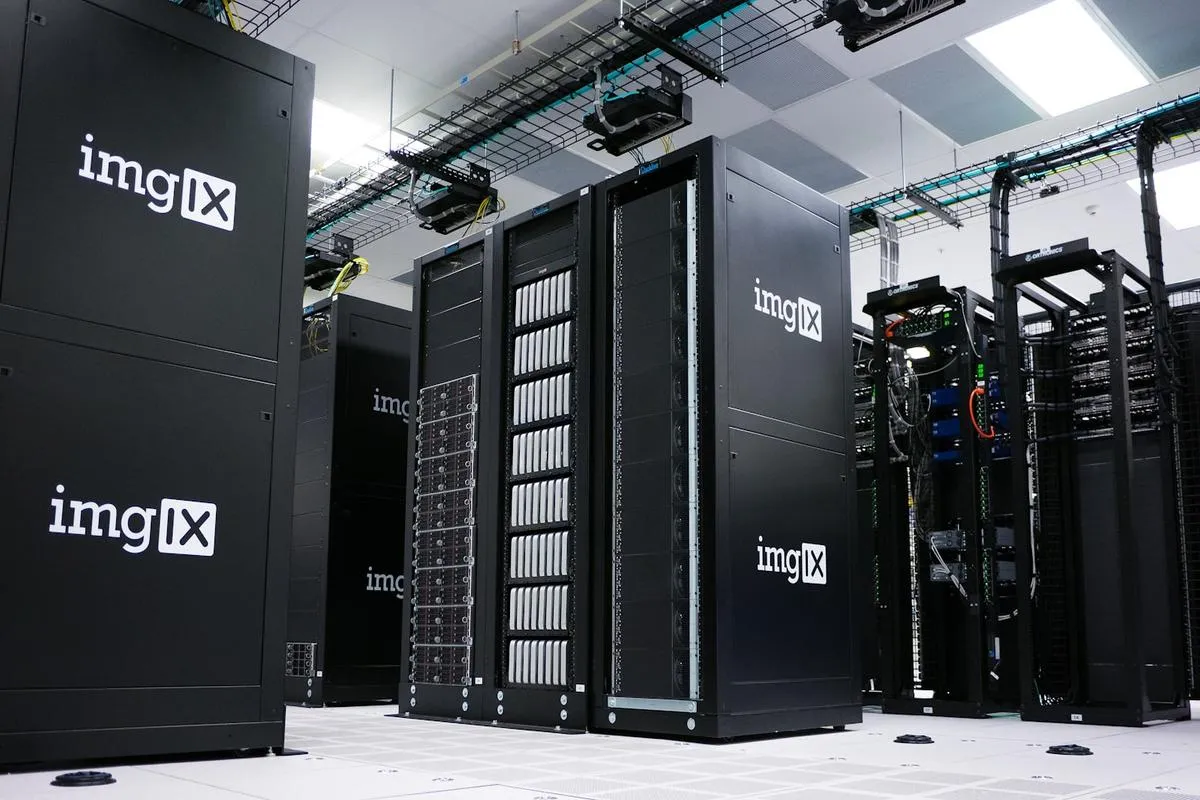
AI Depends on the Magnets Nobody Sees
The obvious story in the US-China AI contest is chips. Washington restricts advanced semiconductors. Beijing accelerates domestic alternatives. Both sides claim the other is trying to contain its technological future. That story is real, but it is incomplete.
The more dangerous mechanism sits further down the physical stack: the rare-earth magnets embedded in the equipment needed to turn chips into operating AI capacity.
A leading AI accelerator is useless inside a data center that cannot obtain power gear, cooling systems, high-efficiency motors, backup equipment, precision controls, or the industrial machinery used to build and maintain the facility. Many of those systems depend, directly or indirectly, on rare-earth materials and permanent magnets. China’s willingness to place export controls on rare-earth elements and magnets therefore creates a different kind of leverage. It does not need to stop chip shipments to create pain. It can slow the construction schedule of the infrastructure that makes large-scale AI deployment possible.
That is the overlooked risk to US-China détente. AI competition is not only a contest over intellectual property or compute performance. It is increasingly a contest over who can interrupt the other side’s industrial timetable without firing a shot.
The Overlooked Angle
The narrow issue is this: rare-earth magnet controls can convert AI infrastructure from a software-and-chip investment story into a procurement and construction bottleneck.
This matters because AI capacity is commonly discussed as if it comes from a simple formula:
- Buy more accelerators.
- Build more data centers.
- Add more electricity.
- Train larger models.
Reality is uglier. Large AI facilities are synchronized industrial projects. A delay in one critical component can strand capital across the entire build. Servers may arrive, but not the switchgear. Power may be contracted, but not the equipment that distributes it. A facility shell may be complete, but cooling and high-efficiency mechanical systems may still be waiting on constrained inputs.
The constraint does not need to affect every component. It only needs to affect components with three characteristics:
- They are hard to substitute quickly.
- They sit on the project’s critical path.
- Their absence prevents expensive assets from generating revenue.
Rare-earth magnets can fit this profile because they are not decorative commodity inputs. They are essential to motors, sensors, industrial systems, robotics, grid equipment, and certain advanced manufacturing processes. Their role varies by product, but that is precisely why the exposure is easy to underestimate. The vulnerability is distributed across suppliers rather than concentrated in one obvious purchase order.
A chip export control is visible. A magnet-related procurement delay appears first as a late motor, an unavailable actuator, a longer qualification process, or a supplier asking for revised delivery terms. By the time senior management calls it a strategic issue, the construction schedule has already slipped.
That is leverage with plausible deniability. And it is more destabilizing than a clean ban because it turns every commercial transaction into a potential political bargaining point.
Why This Small Detail Matters
AI data centers are capital-intensive machines with little tolerance for idle time. Their economics depend on bringing massive fixed investments online quickly and operating them at high utilization.
A delayed facility does not merely defer a ribbon-cutting. It creates several layers of cost at once:
- Capital is committed but not earning a return.
- Hardware can depreciate while sitting unused.
- Cloud capacity promised to enterprise customers cannot be delivered.
- Power contracts and land commitments continue to accrue.
- Construction crews and specialized contractors must be rescheduled.
- Competitors with available capacity can capture demand and lock in customers.
This is why a modest delay in one equipment category can have a disproportionate commercial effect. The financial damage is not the price of the missing component. It is the value of everything waiting behind it.
Consider the operating logic. A hyperscale operator may spend heavily on land, grid interconnection, buildings, transformers, networking, cooling, and compute hardware before the first customer workload runs. Each element has its own supplier base, engineering requirements, certification process, and lead time. The project is only complete when all of them arrive and work together.
That makes the data center a classic bottleneck business. Throughput is dictated by the slowest indispensable element, not by the average readiness of the supply chain.
Rare-earth export controls become strategically potent because they can increase uncertainty around that slowest element. The actual restriction may cover a narrow material category. But suppliers must then determine whether products contain controlled material, whether licenses are required, whether alternative inputs meet specifications, and whether downstream customers trigger additional compliance scrutiny. Procurement departments hate this kind of ambiguity because they cannot solve it with a standard purchase order.
The result is operational drag.
Operational drag is the silent tax that destroys planning accuracy. It forces companies to carry more inventory, qualify more suppliers, redesign equipment, retain larger procurement teams, and accept lower utilization of capital. None of that makes an AI model better. It merely makes the physical system more expensive to operate.
That is the strategic point. The country that can impose operational drag on a rival’s AI buildout does not need to win the semiconductor race outright. It only needs to make the rival’s capacity expansion slower, more costly, and less predictable.
The Economic Mechanism
The mechanism starts with a simple fact: AI compute is a physical product before it becomes a digital service.
Every major AI deployment requires a chain of industrial conversion:
| Stage | What Must Happen | What a Bottleneck Does |
|---|---|---|
| Compute procurement | Accelerators, servers, networking gear are acquired | Hardware sits in warehouses or is deployed below plan |
| Facility construction | Buildings, cooling, mechanical systems, and controls are installed | Opening dates slip and contractor costs rise |
| Power integration | Grid connections, substations, distribution systems, and backup capacity are completed | Available compute cannot operate reliably |
| Commissioning | Systems are tested as one integrated facility | Minor missing components delay the entire asset |
| Commercial ramp | Capacity is sold or allocated internally | Revenue and model-development schedules move right |
Rare-earth dependency can enter at several stages. It may affect components directly. It may affect the manufacturing equipment used by a supplier. It may affect replacement parts, maintenance inventories, or industrial motors needed to scale output. The exact exposure differs, but the economic consequence is consistent: longer lead times create optionality for the supplier and risk for the buyer.
This is where export controls become more powerful than tariffs.
A tariff raises the landed cost of a product. Companies dislike it, but they can model it. They negotiate prices, pass some cost to customers, shift sourcing over time, or accept a lower margin. A tariff is blunt and visible.
An export-control regime introduces uncertainty. The buyer does not know whether a shipment will clear, how long licensing will take, whether rules will tighten, or whether a nominally compliant supplier will refuse business to avoid regulatory exposure. Uncertainty forces safety behavior. Firms over-order where possible, hold stock, delay commitments, and avoid single-source designs.
Those defensive moves turn a targeted restriction into broader inflation across the supply chain.
The first-order impact may be manageable. The second-order effect is where the damage accumulates:
- Equipment makers increase working capital because they need more buffer stock.
- Buyers pay premiums for qualified alternatives.
- Engineers spend time redesigning around constrained materials.
- Suppliers reserve capacity for politically safer customers.
- Project owners accept later completion dates to avoid contractual penalties.
- Financiers price in more execution risk.
AI infrastructure is especially exposed because its growth model assumes speed. Investors and operators are not building capacity for a stable, mature market. They are racing to secure land, power, hardware, and customers before the next demand surge or model cycle. In such an environment, a six-month procurement delay is not just six months. It can mean missing an entire generation of product demand.
A company that cannot commission capacity on schedule may lose enterprise contracts to a rival. Those contracts are sticky because customers integrate models, data pipelines, security rules, and internal workflows around the provider that had capacity when they needed it. Delayed supply therefore hurts future revenue, not just current revenue.
This is why the magnet issue is economically larger than its invoice value. It attacks the conversion rate between capital expenditure and usable compute.
The Strategic Consequence
China gains leverage not because it can permanently deny every relevant material to the United States, but because replacing a concentrated supply chain is slow, expensive, and technically uneven.
The United States and its allies can diversify mining, processing, magnet manufacturing, recycling, and strategic stockpiles. They should. But diversification is not a press release. It requires years of permitting, financing, processing expertise, customer qualification, environmental compliance, and reliable demand commitments. Mining without processing does not solve the problem. Processing without magnet production does not solve it either. A supply chain is only resilient when every critical conversion step works at commercial scale.
That gap between political ambition and industrial readiness is where leverage lives.
The likely winners are not necessarily the firms with the best AI models. They are the firms with the least fragile procurement architecture.
That favors companies able to do several unglamorous things well:
- Map material exposure beyond their direct suppliers.
- Standardize equipment designs around multiple qualified sources.
- Secure long-term supply commitments before shortages become public.
- Hold targeted inventory of genuinely critical parts.
- Coordinate construction, power, and hardware procurement under one operating plan.
- Accept that resilience carries a cost and price it into capacity contracts.
The losers are companies that treat supply-chain security as a procurement department problem. It is not. If a missing industrial component can delay the monetization of a multibillion-dollar facility, the issue belongs in capital allocation, product planning, and board-level risk management.
There is also a geopolitical consequence. Semiconductor restrictions are already framed as national-security measures. Rare-earth controls create a retaliatory tool that can be framed the same way. Once each side sees industrial dependencies as legitimate instruments of coercion, détente becomes fragile even if senior officials use calmer language.
The danger is not simply escalation through dramatic announcements. It is escalation through cumulative friction. One licensing delay prompts a new screening rule. One screening rule prompts supplier relocation. Relocation prompts subsidies. Subsidies trigger trade complaints. Then national-security exceptions swallow the commercial relationship.
AI amplifies this cycle because both governments see compute capacity as strategically important. That makes almost any industrial dependency adjacent to AI politically sensitive.
What Most Commentary Gets Wrong
Most commentary treats rare-earth restrictions as either a symbolic threat or a simple commodity shock. Both interpretations miss the real mechanism.
The symbolic view assumes that because the United States can eventually develop alternatives, China’s leverage is temporary and therefore unimportant. Temporary leverage can be decisive in a market where capacity timing determines customer ownership, technical momentum, and investor confidence. A delay does not need to last forever to change who wins a cycle.
The commodity-shock view is equally shallow. It asks how much material prices will rise. Price is not the central variable. Availability, qualification, lead-time certainty, and integration risk matter more.
A component can represent a tiny fraction of total project cost and still halt a facility. This is standard industrial arithmetic. A cheap specialized part that is unavailable is more damaging than an expensive part that arrives on time.
Another lazy claim is that AI is mainly a software business and will therefore become less dependent on physical supply chains over time. This confuses the product with the production system. Software scales cheaply after the infrastructure exists. Building the infrastructure does not. The push toward larger models and broader deployment makes the physical layer more important, not less.
The AI sector is not escaping industrial economics. It is importing more of them: energy constraints, construction delays, equipment lead times, raw-material concentration, and geopolitical risk.
Finally, there is an assumption that companies can simply pay more. Money solves a shortage only when supply can expand. In a controlled, concentrated, technically specialized supply chain, higher bids may merely redistribute scarce capacity toward the largest buyers. Smaller cloud operators, regional data-center developers, and equipment makers then absorb the worst delays. The market becomes more concentrated because resilience itself becomes a scale advantage.
That is the ugly outcome corporate optimism tends to skip. Geopolitical supply shocks do not level the playing field. They often reinforce incumbents.
The Hard Business Lesson
The decisive AI asset may not be the most advanced chip. It may be the ability to convert a chip order into a functioning, powered, cooled, commission-ready data center on schedule.
Rare-earth magnet controls matter because they can interfere with that conversion at precisely the point where capital becomes operational capacity. They weaponize the boring middle of the AI value chain: industrial equipment, supplier qualification, mechanical systems, maintenance parts, and delivery dates.
That is why the issue threatens US-China détente. It gives both sides a tool that is economically painful, politically defensible, and easy to escalate in small increments. Neither side has to announce a full rupture. They can simply make the other side’s industrial clock run slower.
Businesses should stop treating this as a distant geopolitical subplot. For any company betting on AI infrastructure, material traceability and equipment redundancy are now part of competitive strategy. The relevant question is not whether a supply chain is cheap under normal conditions. It is whether it can still deliver when normal conditions are gone.
Follow the value, and the conclusion is blunt: the AI race will not be decided only in chip labs or model benchmarks. It will also be decided in the procurement queues for the machinery that nobody notices until it fails to arrive.