AI’s Collateral Problem Is Coming
AI’s Collateral Problem Is Coming
The obvious AI-bubble story is about inflated valuations, breathless forecasts, and investors paying too much for companies that promise to automate everything except their own spending. That is the visible layer. Markets enjoy visible layers because they are easy to debate on television.
The more dangerous layer sits underneath the equity market: debt financing for data-center construction and the awkward fact that a meaningful share of the collateral may depreciate far faster than the debt used to acquire it.
That is the mechanism worth watching after the AI bubble bursts. Not whether a chatbot disappoints consumers. Not whether one chip company misses a quarter. The real pressure point is the collision between long-lived financing structures and short-lived computing assets.
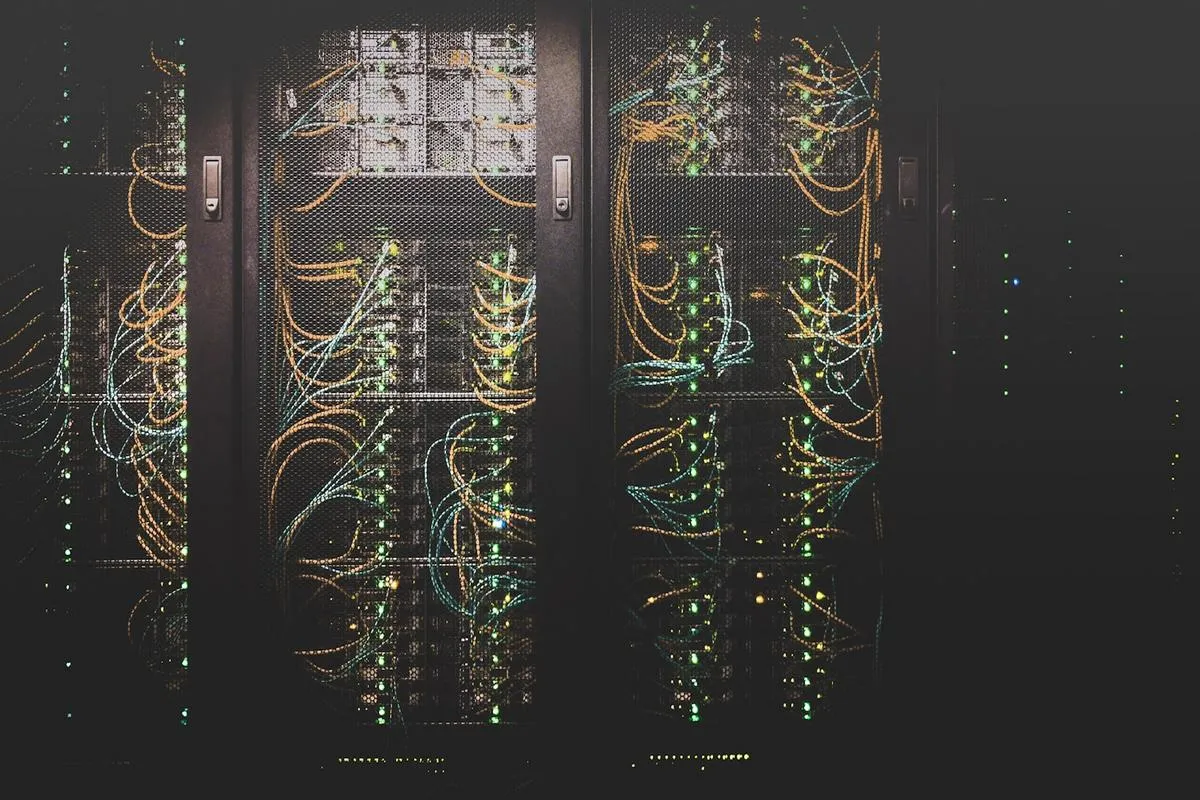
A data center building can last decades. Land does not suddenly become obsolete. Power connections, cooling systems, fiber routes, and electrical substations retain strategic value. But the expensive computing equipment inside the building is another matter. AI accelerators, networking gear, and specialized server configurations can lose commercial value quickly when a new generation offers materially better performance, lower power consumption, or both.
Debt markets do not like assets whose resale value becomes uncertain before the loan reaches maturity. Yet that is exactly what AI infrastructure financing increasingly asks them to accept.
The Overlooked Angle
The overlooked angle is not simply that AI requires enormous capital expenditure. Plenty of industries require enormous capital expenditure. Railroads, pipelines, telecom networks, shipping fleets, and power plants all consume capital at industrial scale.
The specific problem is that AI data-center debt may be underwritten against a blended asset base that looks stable from a distance but contains two radically different kinds of collateral:
- Long-lived infrastructure such as land, shells, power systems, and cooling equipment.
- Short-cycle computing equipment whose economic usefulness can fall sharply after a hardware generation changes.
This distinction matters because lenders rarely finance a vague concept called “AI infrastructure.” They finance assets, contracts, cash flows, and collateral packages. The quality of each element determines how much debt can be raised, at what interest rate, with what covenants, and under what refinancing assumptions.
The marketing version of the AI buildout says data centers are digital real estate. That phrase is convenient and partly true. It is also dangerously incomplete.
A warehouse remains a warehouse if its tenant changes. A data center designed around a specific generation of high-density AI hardware can face a different reality. Its tenant may need newer equipment, more power per rack, different cooling architecture, different network topology, or a different physical layout. The building still exists, but the revenue-producing configuration can require another capital injection before the original financing has been repaid.
That is not ordinary real estate risk. It is a maturity mismatch disguised as infrastructure.
Why This Small Detail Matters
Debt problems begin when an asset is assumed to retain value long enough to support refinancing. That assumption is usually invisible during a boom because rising demand covers analytical mistakes. Occupancy looks strong. Equipment utilization appears healthy. Suppliers offer favorable projections. Lenders see well-known technology tenants and assume the cash flow is durable.
Then demand slows, pricing weakens, or a new hardware cycle arrives. Suddenly the distinction between a building and the machines inside it stops being academic.
If AI capacity is financed with a mix of construction loans, equipment leases, asset-backed facilities, private credit, project finance, and corporate borrowing, the system does not need a dramatic default wave to become stressed. It only needs refinancing to get harder.
That is how credit cycles usually turn. The original loan may be serviceable. The trouble appears when the borrower must roll it over at a higher rate, with more equity, lower collateral values, or stricter covenants.
For an AI data-center operator, the refinancing equation can become ugly quickly:
- Hardware generations improve, reducing the market value of installed equipment.
- Customers demand newer capacity because better chips lower their cost per model training run or inference query.
- Older machines generate less revenue per unit of power and floor space.
- The operator must spend again to remain competitive.
- Debt service continues even as the prior hardware earns less.
- Lenders reassess the collateral package precisely when the operator needs capital most.
This is not a software problem. It is an asset-liability problem.
The business consequence is significant because data centers are often presented as scarce infrastructure. Scarcity can protect economics, but only when the scarce element remains scarce. In AI, the real bottleneck may be power access, not server racks. If power interconnection rights retain value while GPU clusters decay rapidly, then lenders must separate those assets rather than treat the entire project as one stable pool of collateral.
That separation is where many underwriting models can become fragile.
The Economic Mechanism
The core mechanism is simple: debt is priced on expected repayment, and expected repayment depends on reliable cash flow plus credible collateral. AI infrastructure complicates both.
The cash-flow problem
A conventional infrastructure project often relies on long-term contracts. The lender takes comfort from contracted revenue, predictable operating costs, and an asset that can continue serving another customer if the first one leaves.
AI compute contracts may not offer the same comfort. Some customers need capacity for training runs that are intense but temporary. Others sign commitments that can be renegotiated if model economics deteriorate. Smaller AI companies may themselves depend on venture funding. Even large customers can shift workloads if a competing cloud provider offers better hardware or lower prices.
The revenue is real while utilization is high. But high utilization during an equipment shortage is not proof of durable pricing power. It may simply mean supply has not caught up yet.
A lender underwriting a five- or seven-year credit facility must ask a dull question that the AI narrative prefers to avoid: what will this cluster earn after the next two hardware generations arrive?
If the answer is uncertain, the lender should not value that cluster as if it were a durable utility asset.
The collateral problem
Collateral is supposed to reduce loss severity if the borrower cannot pay. But collateral only works when someone wants to buy it at a predictable price.
For AI equipment, resale value is difficult to estimate because performance is not the only variable. Power efficiency matters. Memory architecture matters. Software compatibility matters. Interconnect standards matter. A chip that remains technically functional may become commercially unattractive if it consumes too much electricity relative to newer alternatives.
That produces a nasty form of depreciation. The equipment does not need to break. It merely needs to become uneconomic.
In a weak market, every operator may try to sell similar older hardware at once. Buyers know that newer equipment is available or imminent. Secondary-market values fall just when lenders need them to hold.
This is why the phrase “secured by hard assets” can mislead. Servers are physical assets, but physical is not the same as durable. A machine can be heavy, expensive, and nearly worthless in a distressed sale.
The refinancing problem
Suppose an operator funds a large expansion with debt based on projected utilization, expected equipment residual values, and a belief that new capital will remain available. If demand meets expectations, the model works. If demand disappoints modestly, the model may still work operationally but fail financially.
The operator then faces a choice:
- Inject more equity to reduce leverage.
- Sell assets at a discount.
- Extend debt at a higher interest cost.
- Cut prices to preserve utilization, reducing operating margin.
- Delay upgrades and lose competitive position.
- Seek a strategic buyer while negotiating with creditors.
None of these options is attractive. More importantly, they can reinforce each other. Lower pricing hurts cash flow. Lower cash flow makes refinancing harder. Harder refinancing limits upgrade spending. Delayed upgrades make the installed fleet less competitive. Less competitive capacity requires still lower pricing.
That is the debt spiral hidden inside an infrastructure boom.
The power mismatch
There is an additional complication. AI hardware becomes more capable, but it also reshapes power requirements. A facility built around one generation of equipment may need material electrical and cooling upgrades to host the next generation efficiently.
This creates a second capital cycle layered on top of the first. The operator is not merely replacing servers. It may be rebuilding parts of the facility to support denser racks, liquid cooling, new cabling, and stronger power delivery.
The building remains useful, but it does not remain static. That means the supposedly long-lived portion of the collateral may require recurring investment to keep supporting the short-lived portion.
The debt model becomes vulnerable when it assumes a clean division between stable real estate and replaceable equipment. In practice, hardware turnover can force infrastructure turnover.
The Strategic Consequence
The winners will not necessarily be the companies with the largest announced AI capacity. They will be the ones that control the assets lenders value most highly and can replace the assets lenders value least highly without destabilizing the balance sheet.
That favors several types of players.
First, large cloud platforms with diversified cash flows have an advantage. They can fund hardware refreshes from operating cash flow, spread utilization across a broad customer base, and treat older equipment as part of a wider fleet-management problem. Their balance sheets absorb volatility that would crush a pure-play operator.
Second, firms with privileged access to power and grid interconnection have a real strategic asset. Compute hardware can be purchased by anyone with enough capital. Firm power access in the right location cannot be replicated on demand. If the AI cycle cools, valuable power-connected sites may retain worth even when specific server clusters lose value.
Third, chip suppliers and equipment vendors can retain leverage if customers remain trapped in rapid upgrade cycles. This is the ugly beauty of selling picks and shovels with a short replacement cadence. The buyer takes the utilization risk. The supplier books revenue when the buyer refreshes.
The losers are likely to be highly leveraged specialists whose economics depend on three assumptions holding simultaneously:
- AI demand remains strong enough to keep capacity full.
- Customers accept prices sufficient to cover rising financing costs.
- Old hardware retains enough value to support the next financing round.
That is a fragile stack of assumptions. A good business should not require all three to remain perfect.
Private credit deserves particular scrutiny here. It has become an important source of capital where banks are constrained, cautious, or unwilling to hold specialized exposure. Private lenders can move faster and structure more flexibly. That is useful until flexibility becomes a substitute for price discovery.
If loans are held in vehicles with limited public disclosure, outside observers may not know how aggressively collateral values are being marked, how concentrated exposures have become, or how many loans depend on the same refinancing window. The lack of transparency does not create the risk. It delays recognition of it.
And delayed recognition is how a manageable repricing becomes a liquidity event.
What Most Commentary Gets Wrong
Most commentary treats AI infrastructure debt as a question of whether spending is too high. That is lazy. Spending can be high and still rational if returns are durable, financing matches asset life, and capacity is contracted to creditworthy customers on terms that survive a downturn.
The sharper question is whether the financing structure recognizes technological obsolescence.
Calling every data center a real-estate asset misses the point. The relevant unit is not the building. It is the revenue-producing combination of power, cooling, network connectivity, hardware, software, and customer demand. Break any part of that combination and the collateral value changes.
Another lazy interpretation is that better chips automatically solve the problem. Better chips may improve customer economics, but they can worsen the lender’s position by making older fleets less desirable sooner. Efficiency gains are excellent for the user of new hardware and potentially brutal for the owner of last year’s capital expenditure.
There is also too much focus on headline defaults. Credit deterioration often starts well before default through covenant amendments, maturity extensions, interest reserves, revised appraisals, and quiet equity injections. These are not trivial technicalities. They are evidence that the original underwriting assumptions no longer fit the asset.
The absence of public stress does not prove resilience. It may simply mean loans have not reached the point where they must be repriced.
Finally, the argument that “demand for AI will keep growing” is not enough. Demand can grow while returns fall. Airlines carry more passengers than ever and still struggle with economics because capacity, fixed costs, and competitive pricing consume the upside. AI compute can face a similar outcome: more usage, more installed capacity, more capital employed, and less return per dollar of infrastructure.
Growth is not a defense against bad leverage.
The Hard Business Lesson
After the AI bubble bursts, the decisive question will not be which company had the most ambitious model or the loudest product launch. It will be who financed rapidly aging equipment with patient capital, durable contracts, and enough balance-sheet capacity to survive a hardware reset.
The asset that matters most may not be the GPU cluster at all. It may be the power connection, the customer contract, or the corporate balance sheet standing behind the project.
Everything else is vulnerable to repricing.
Executives and investors should stop treating AI infrastructure as a single category. Separate the long-lived assets from the short-lived ones. Separate contracted cash flow from speculative utilization. Separate genuine power scarcity from easily replicated server capacity. And separate debt that can survive a weak refinancing market from debt that only works if the next funding round arrives on schedule.
That is where value will be found after the excitement fades.
The hard truth is simple. AI hardware may be revolutionary, but revolutionary hardware is often terrible collateral. The companies that understand this will own the durable bottlenecks. The rest will discover that their futuristic infrastructure was financed like a building and depreciated like inventory.